
RESTAURANT APTOS
147 Mount Barker road, stirling, south australia
the digest
Order
A drinks pairing to complement the dining experience.
Pay
$495 per person for the tasting menu, plus a service surcharge for the online reservation.
A few beverage pairing options are offered including $175 for the non-alcoholic, $225 for hybrid, $295 for Australian wines, $495 for global wines and $795 for the premium.
Consider
Arrive early to enjoy a pre-dinner cocktail at Bar Mary or a whisky at Bar Cruz, located in the same building.
Wear
There’s no formal dress code, but smart, elegant attire is suggested.
Reserve
Lunch Saturday and Sunday with sittings from 12.15pm.
Dinner Thursday to Saturday with two sittings at 5.30pm and 8.30pm.
Reservations are secured with full prepayment of the tasting menu, which can be amended or transferred up to 7 days prior but is non-refundable from the time of the booking. A 10% surcharge applies on Sundays and 15% on public holidays.
Travel
Complimentary parking onsite.
Rideshare is available in the area but may be a 10-15 minute wait.
full REVIEW
At circa $500 per guest, it’s inevitable that the headlines around the launch of Restaurant Aptos in the Adelaide Hills have been anchored to the cost. Is it worth it? The answer depends on what you’re hoping to find in a dining room.
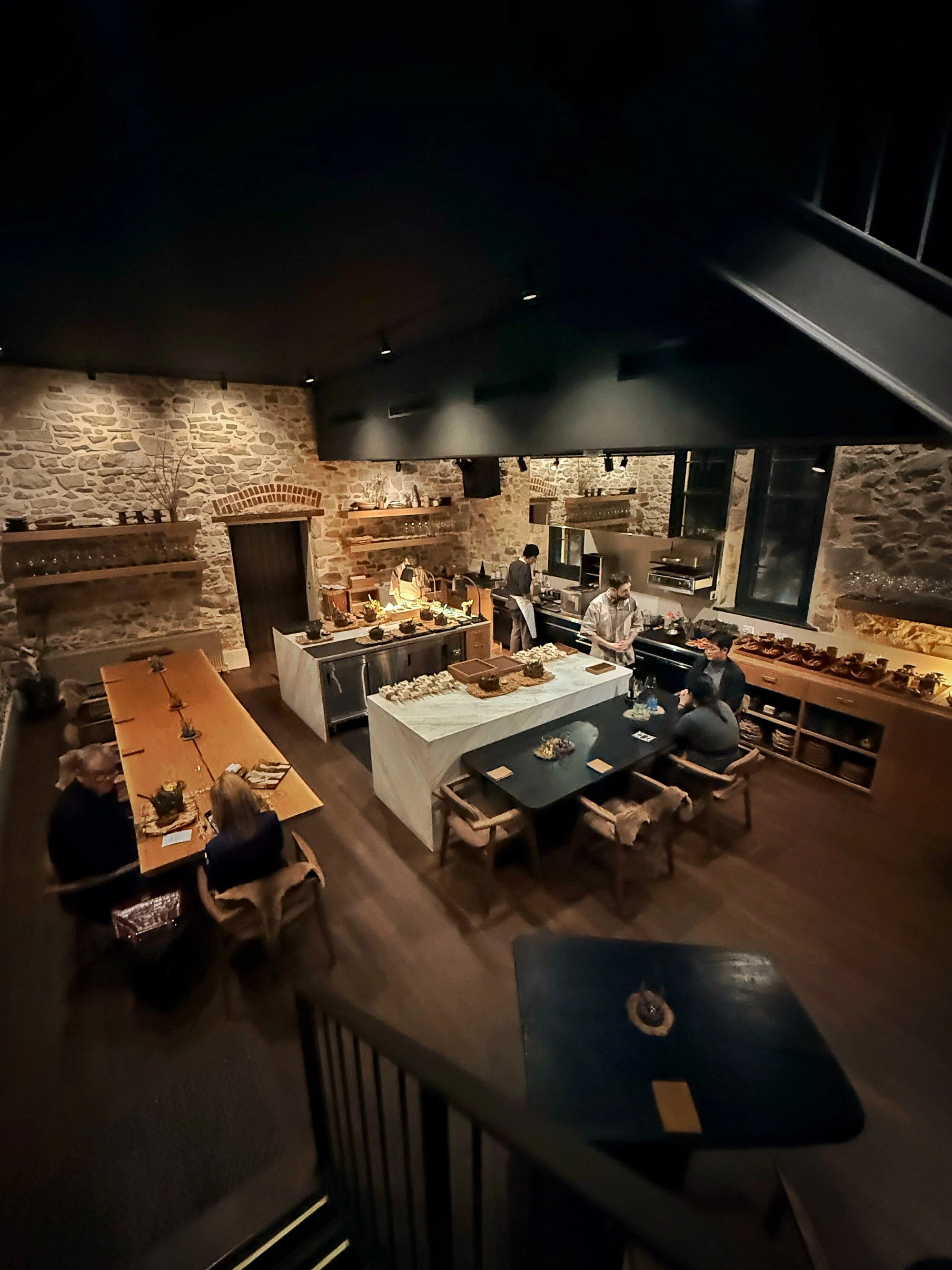
Chef-owner Justin James has spent two years realising a lifelong vision: a culinary destination Australia hasn’t seen before, where 15 courses unfold across a progression of spaces in a historic 1858 church. The essence of Aptos is a celebration of native forage. Those with an adventurous palate will find plenty to explore in wild buffalo, crocodile, kangaroo, possum and green ants, alongside house-grown lemon myrtle, bush tomato, muntries and Geraldton wax.
The Prologue
A dining experience begins at the reservation. Securing one of the 14 seats requires full prepayment ($495 plus a booking fee per person). Bookings are changeable and transferable up to seven days prior, but ‘as with a concert, theatre or sporting event, all reservations are final and non-refundable’. As an interstate visitor, I took a risk and booked late to minimise the chance of itinerary changes!
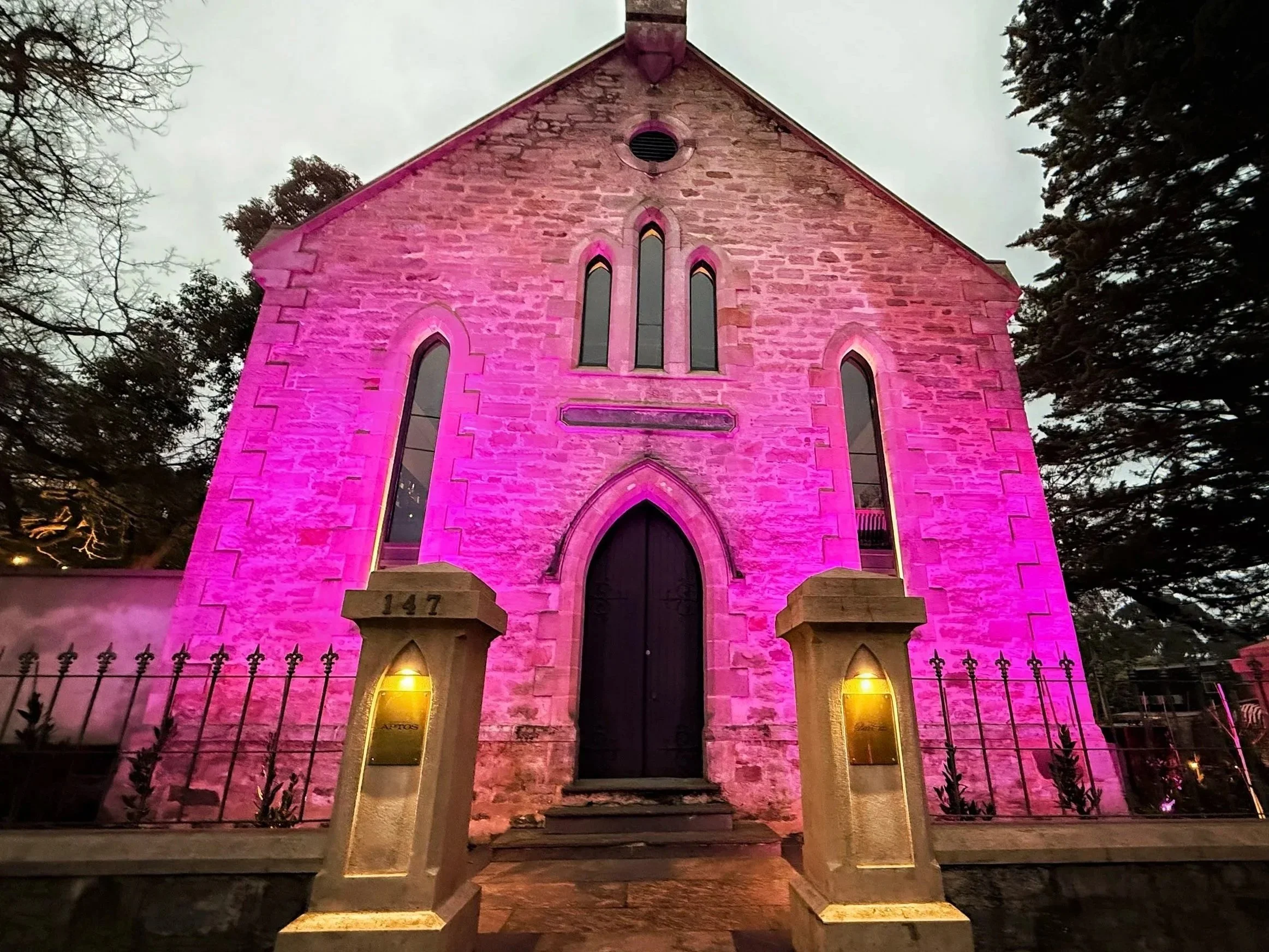
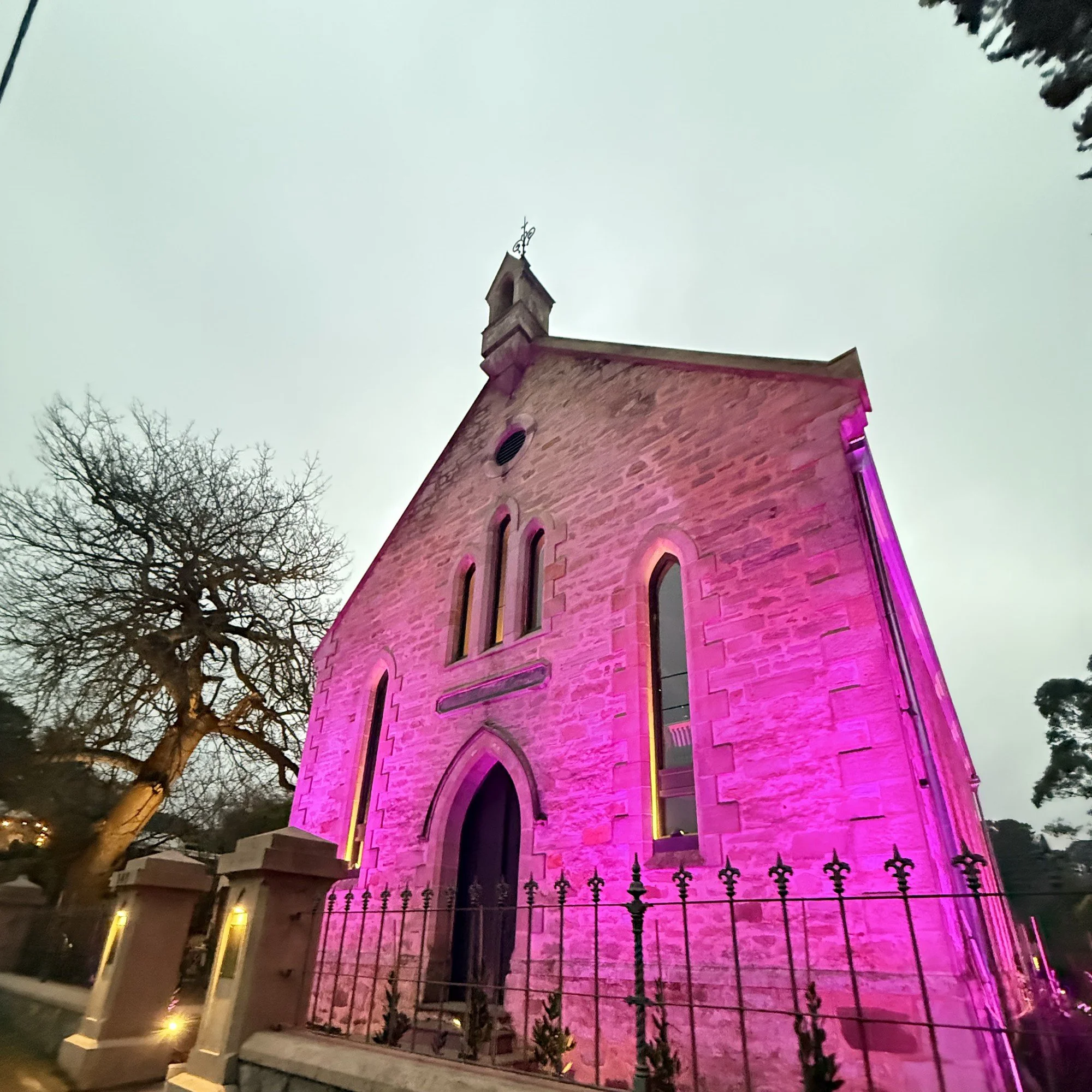
Standing at the gate piers on the night, with the church illuminated in pink, I was struck by the magnitude of the multi-level venue and sensed that this degustation wouldn’t be like the others.
Chapter One: The Library
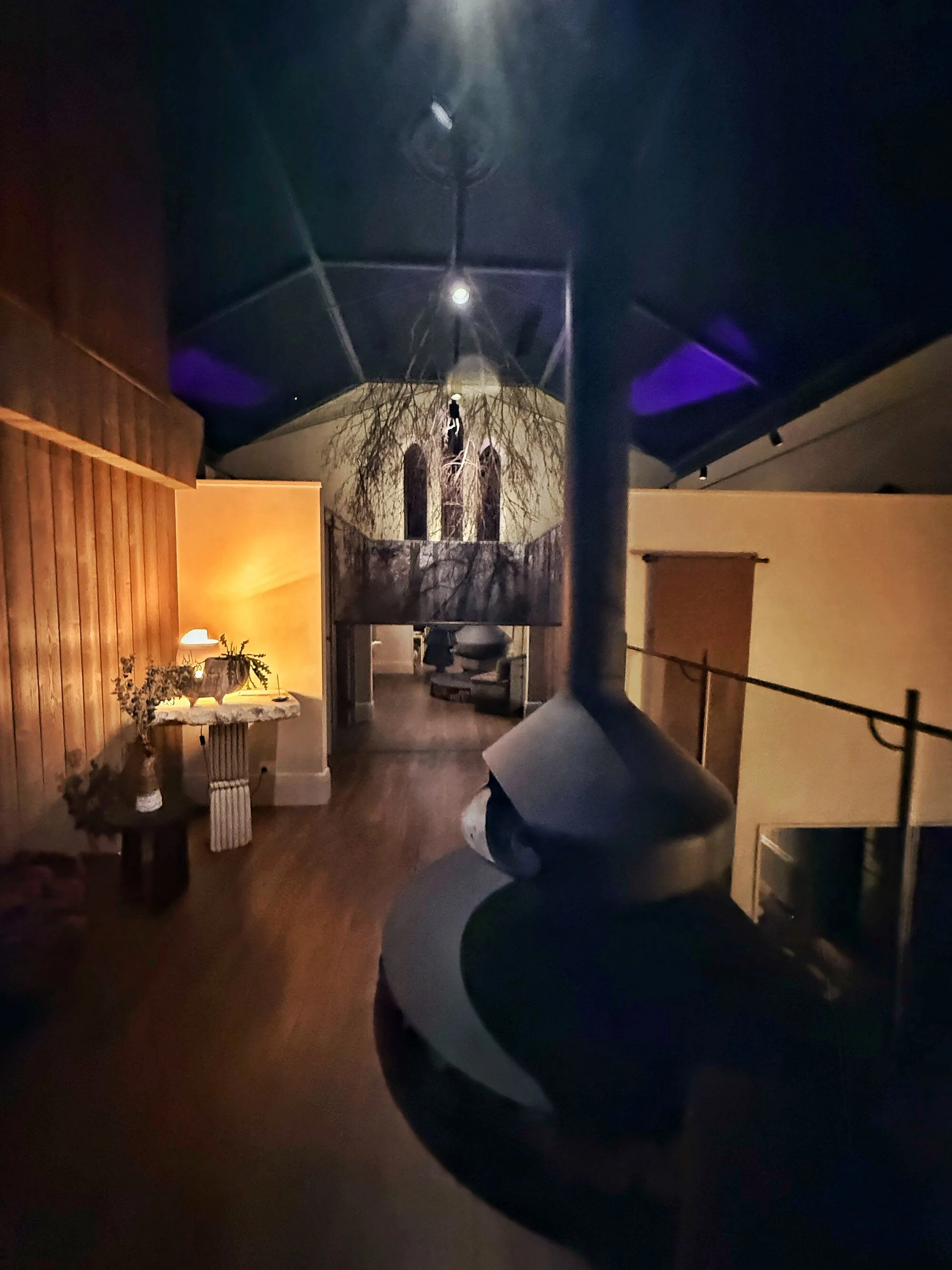
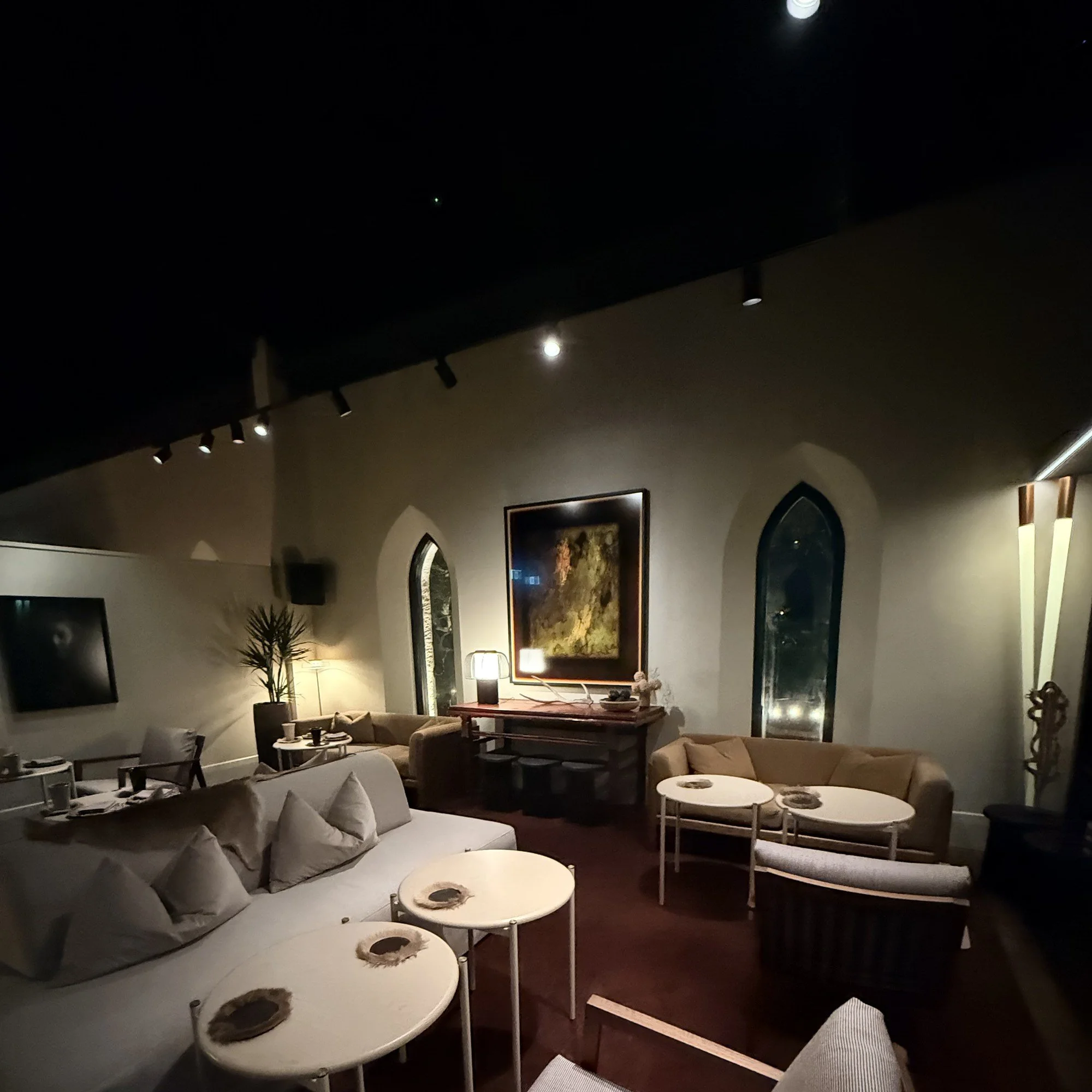
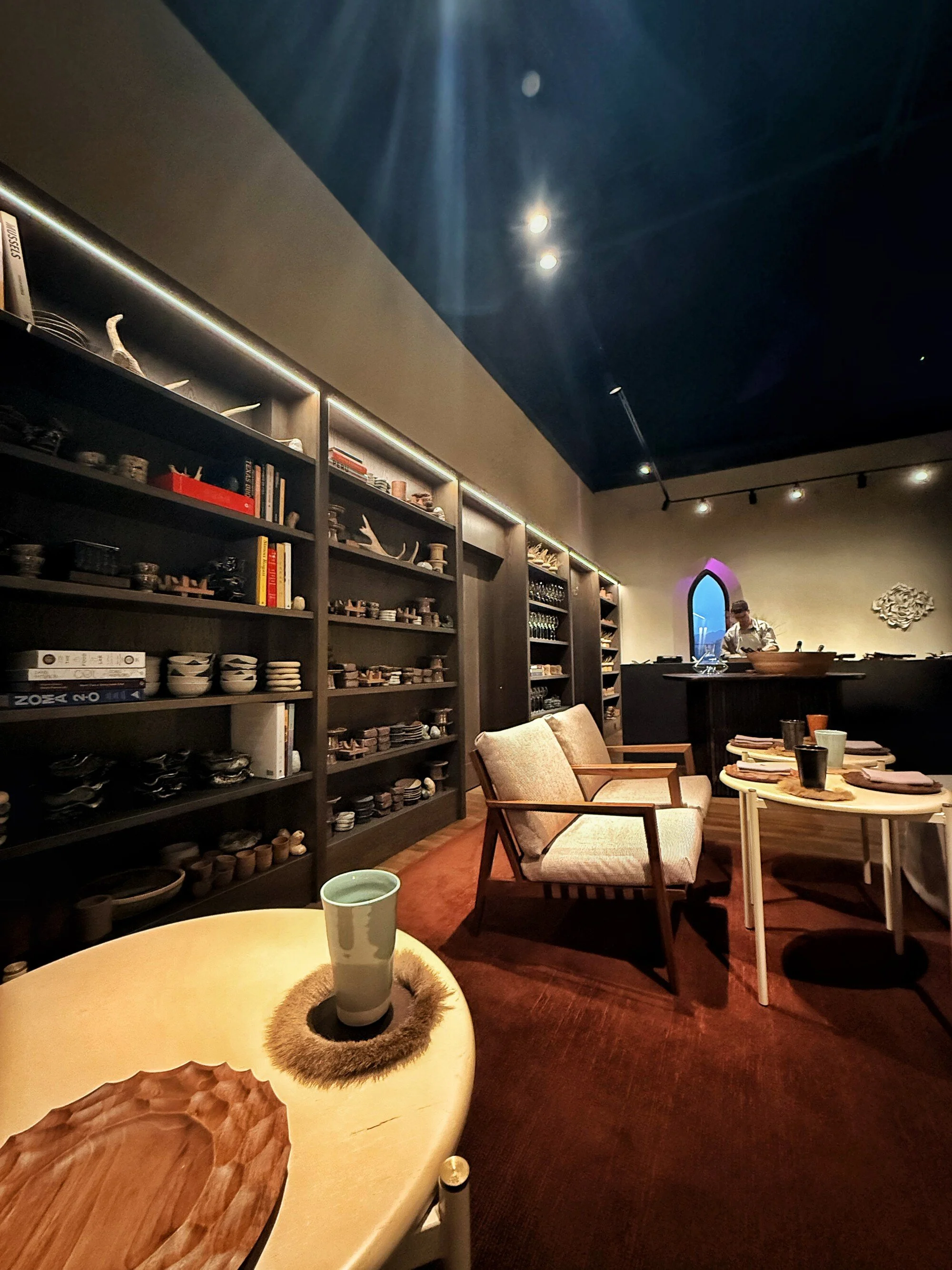
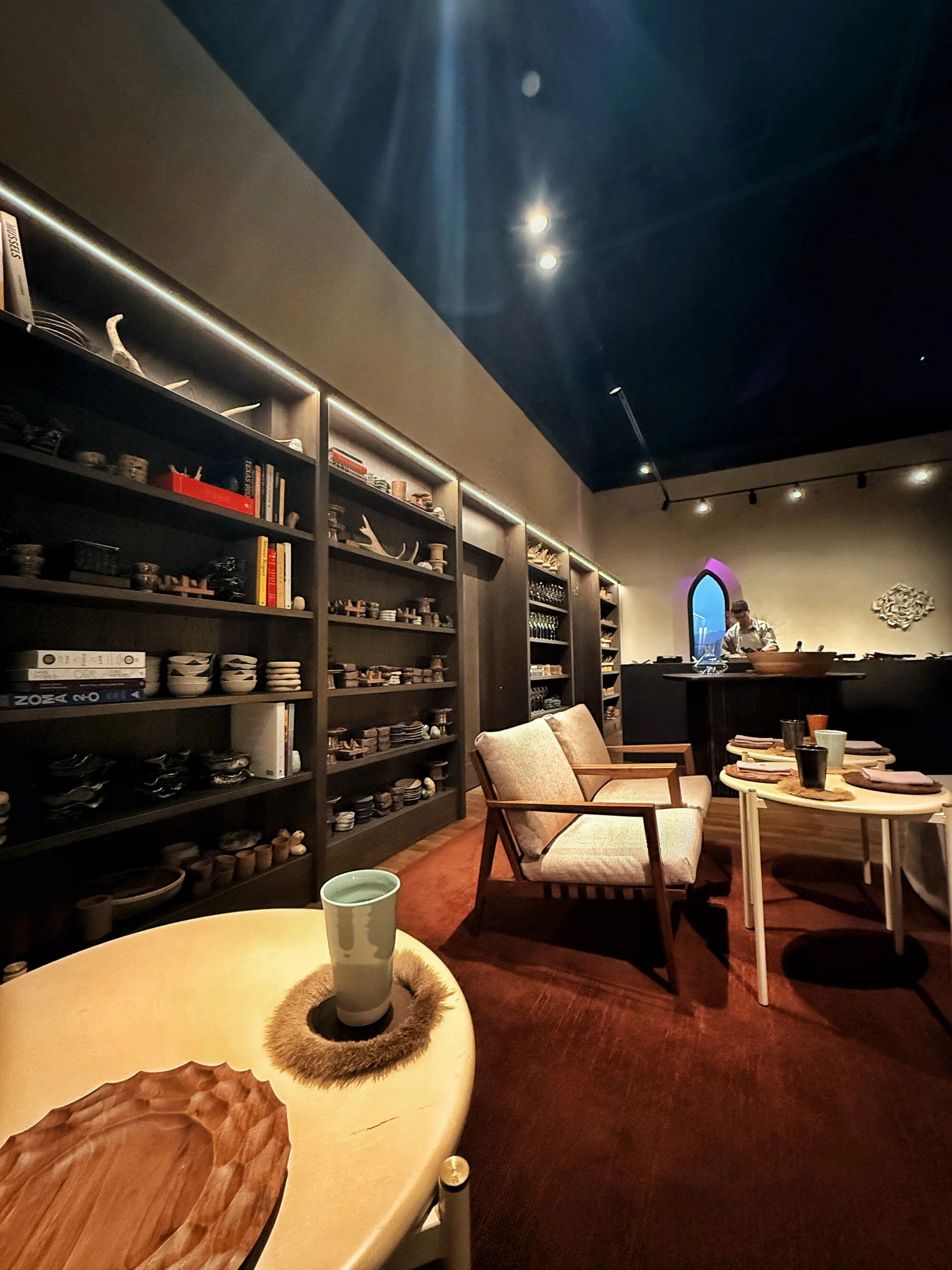
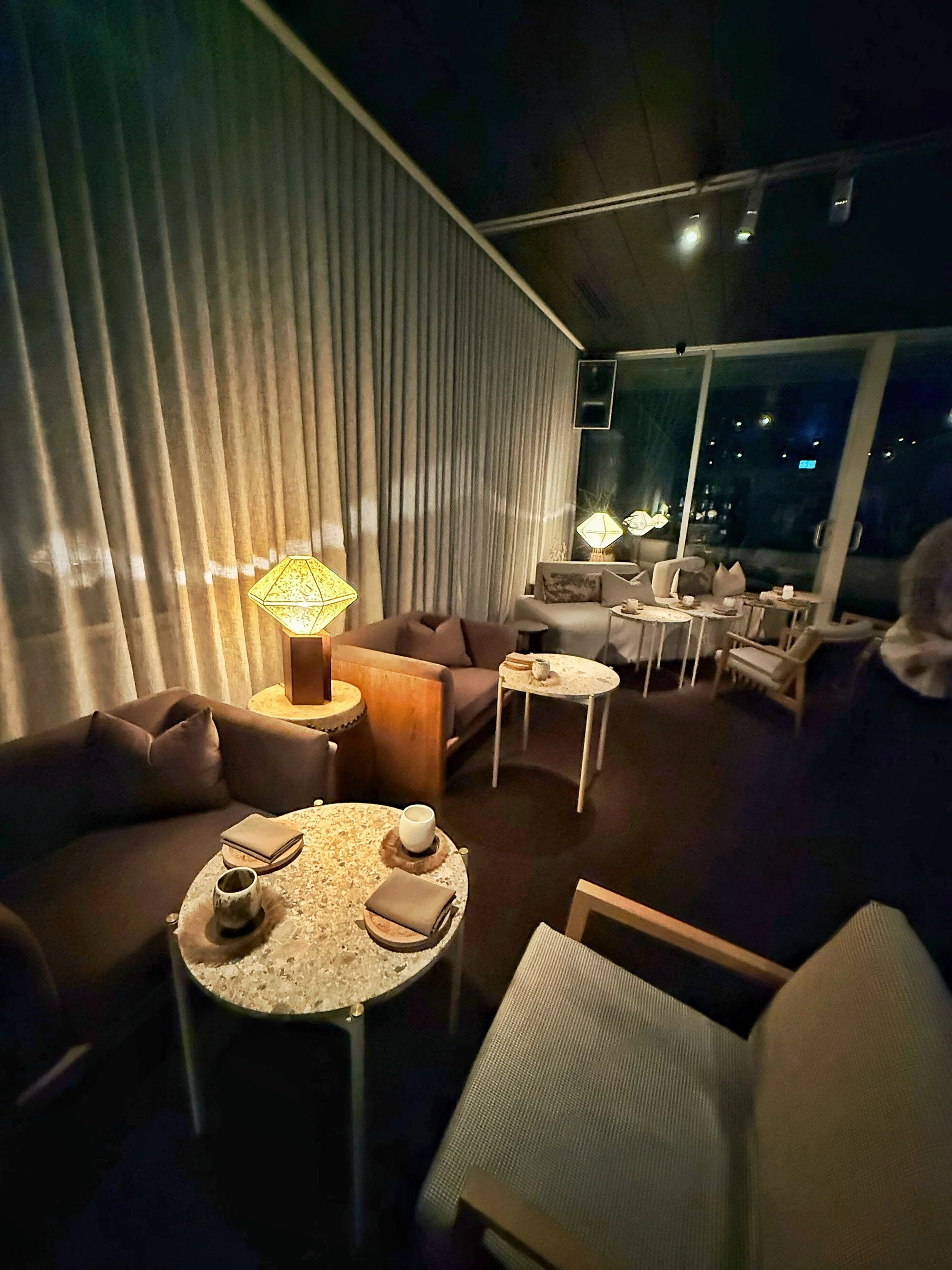
Beyond the towering front door, I was greeted warmly by Jayden and led up the stairs, past a hanging fireplace, to The Library: a sitting room where the journey begins with six courses.
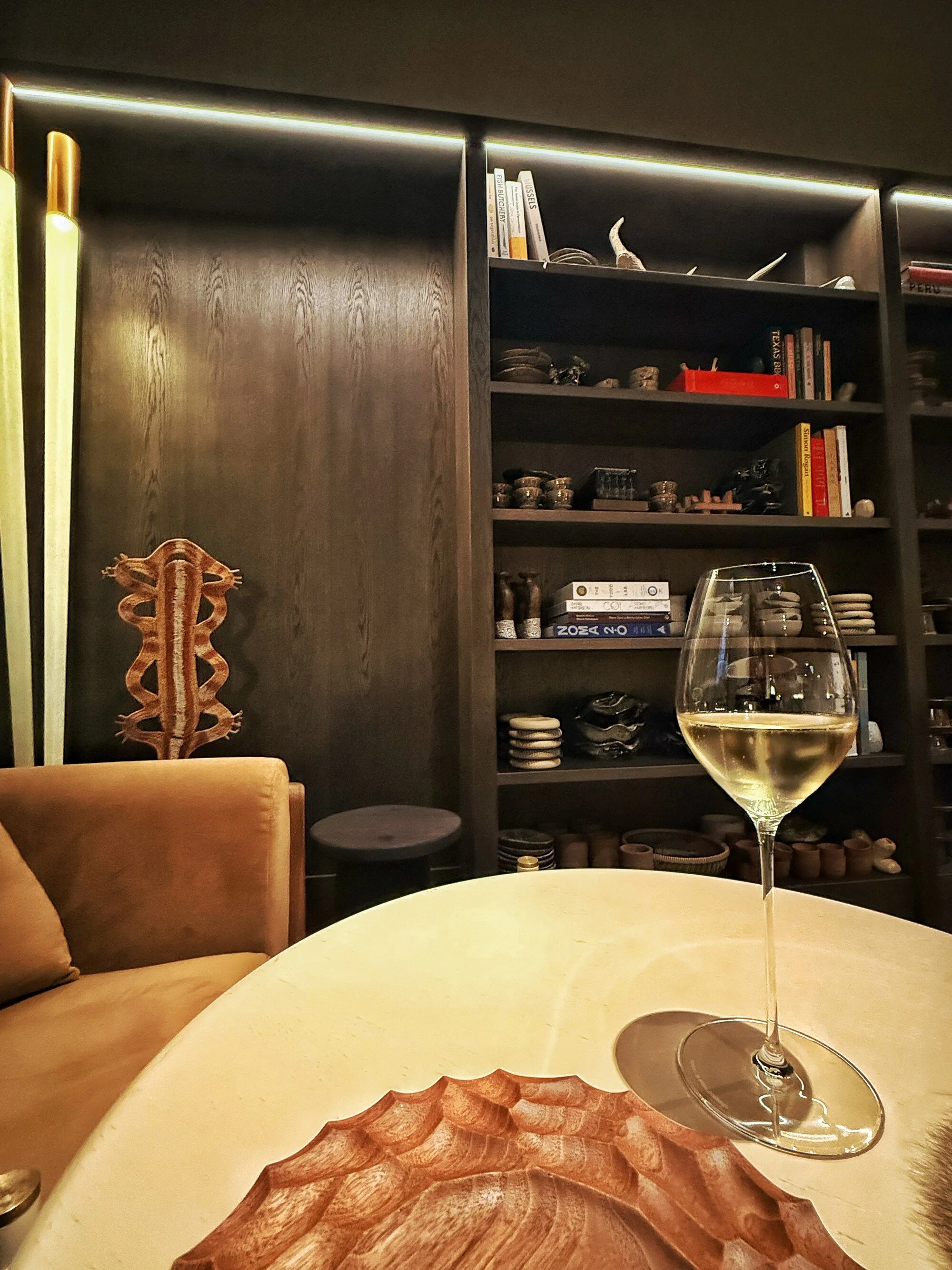
My eyes wandered around the space and I was immediately captivated. Every detail is considered, every element belongs. The building’s layered past is honoured throughout: thirty Australian artworks recall its 35 years as a gallery, and preserved artefacts its beginnings as a church. Iconic cookbooks from around the globe line the shelves beside Feldmark Pottery wares from the Snowy Mountains, a collaboration with ceramicist Andrei Davidoff dating back to Justin’s time at Vue de monde.
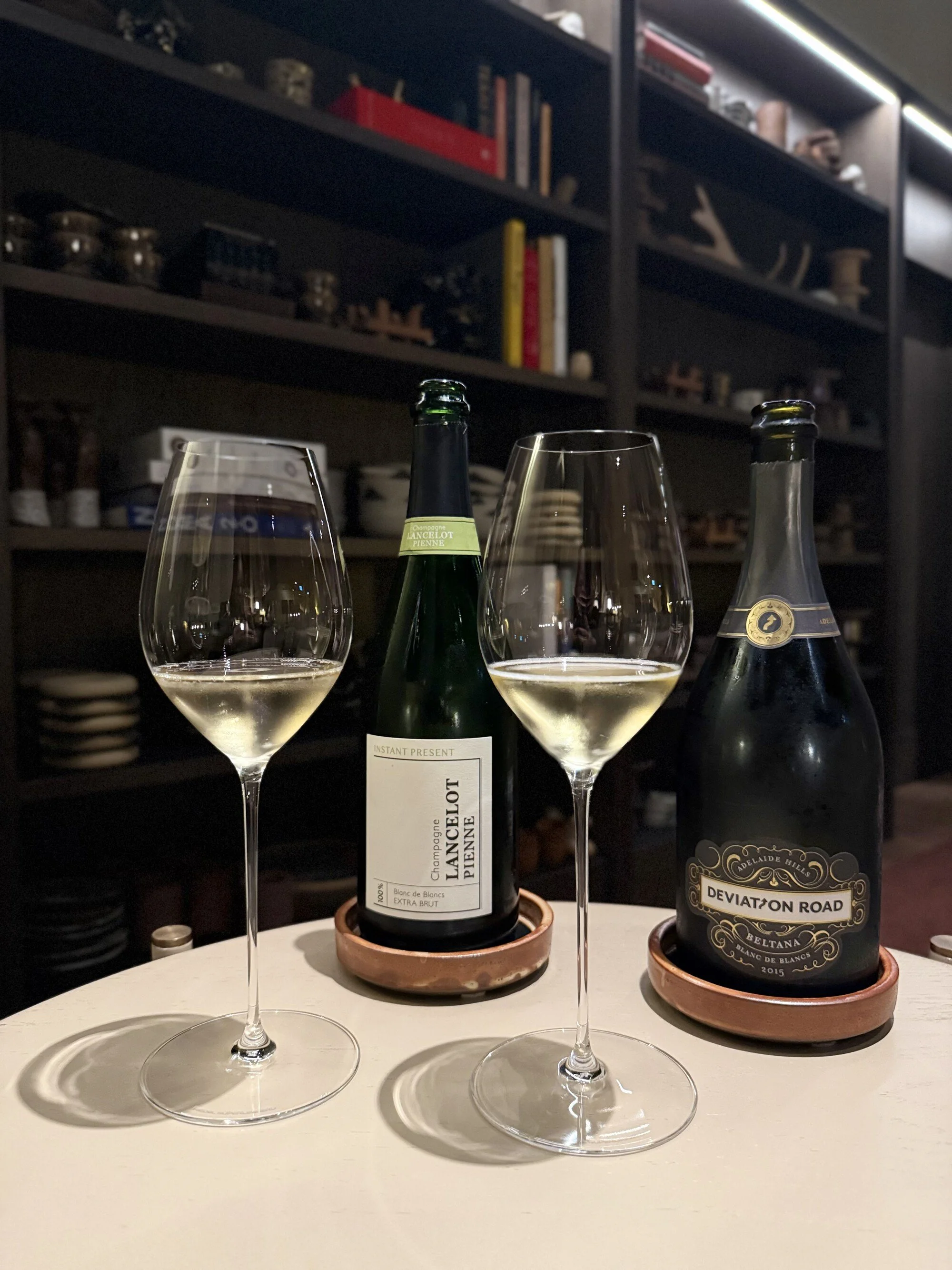
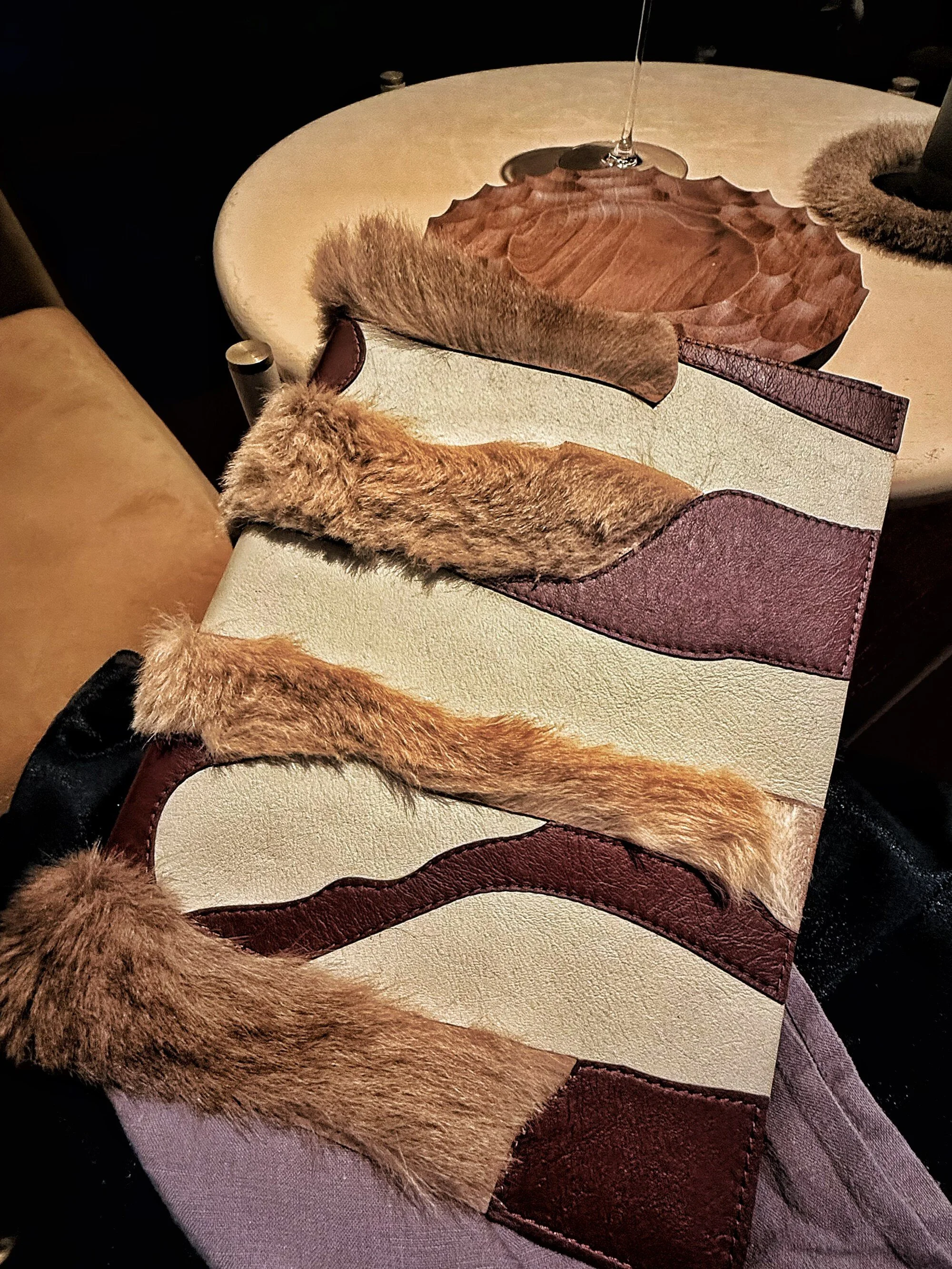
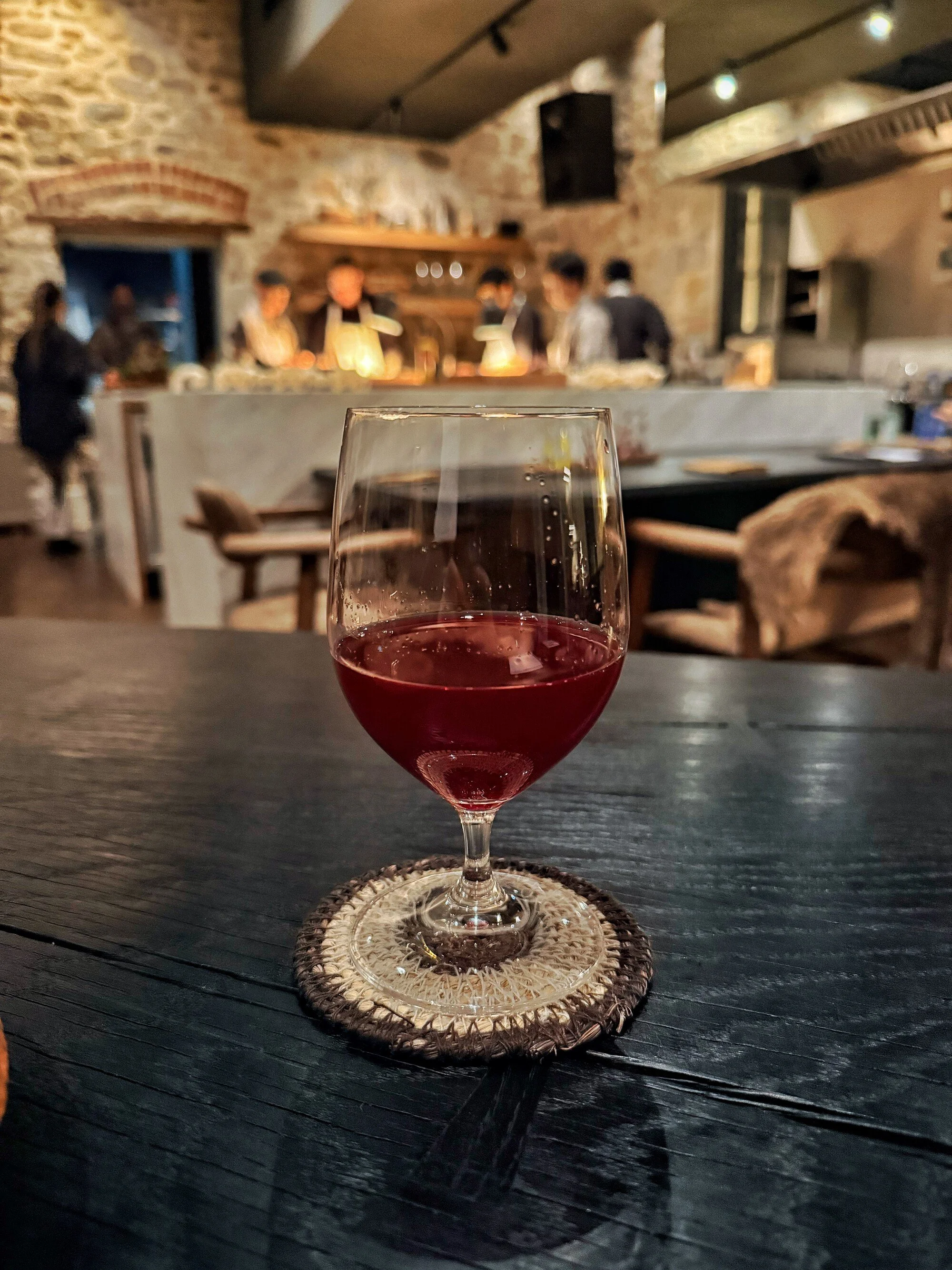
A fur-trimmed beverage menu appeared and, mindful that I needed to stay sharp to write this review, I settled on the hybrid pairing: local wines alternating with temperance creations.
The team moved through the room with calm fluidity and camaraderie, and the kitchen hummed at a quiet rhythm, no doubt the product of relentless discipline. I could describe the first impression many ways but simply put: it felt bloody good.
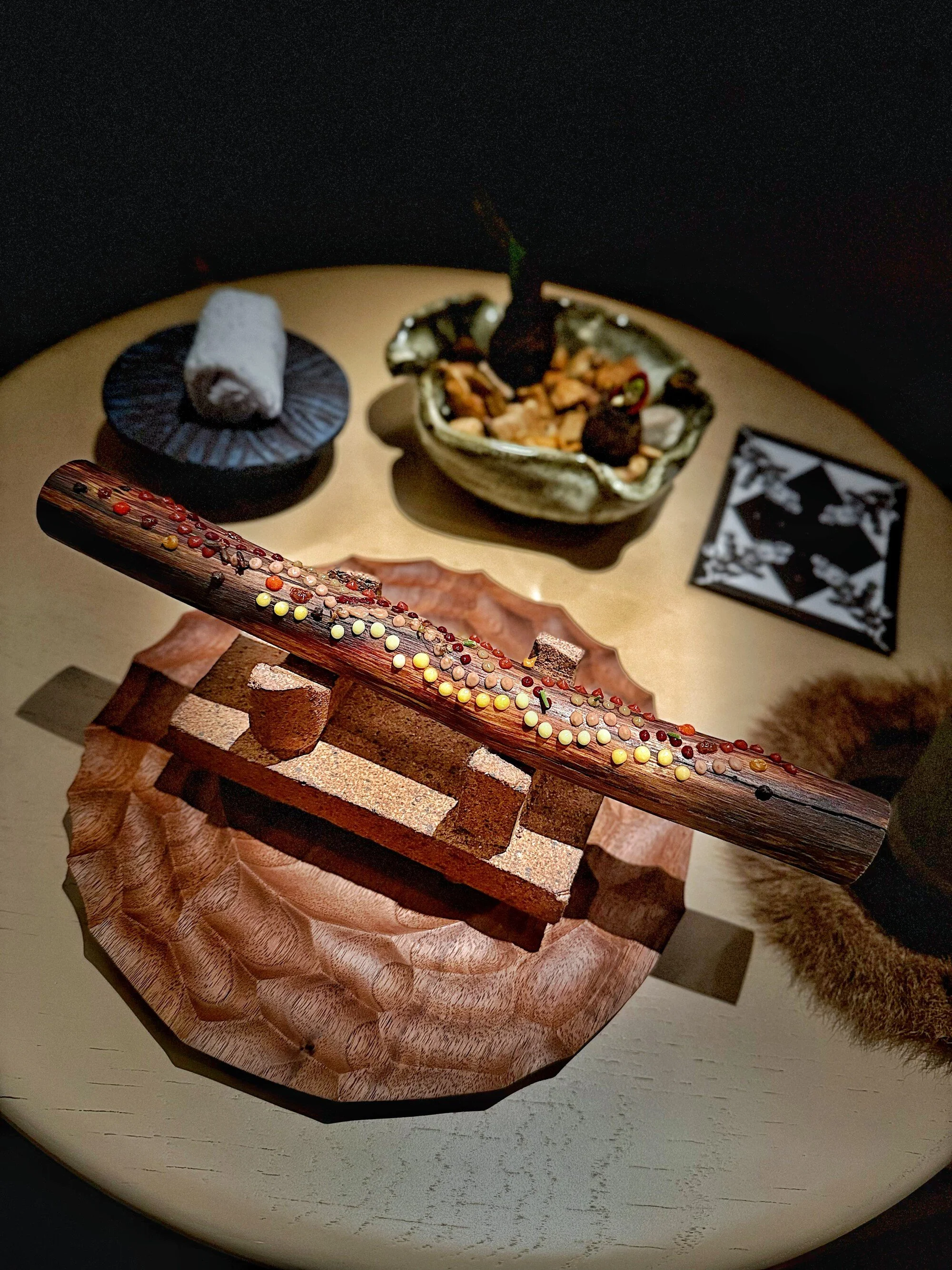
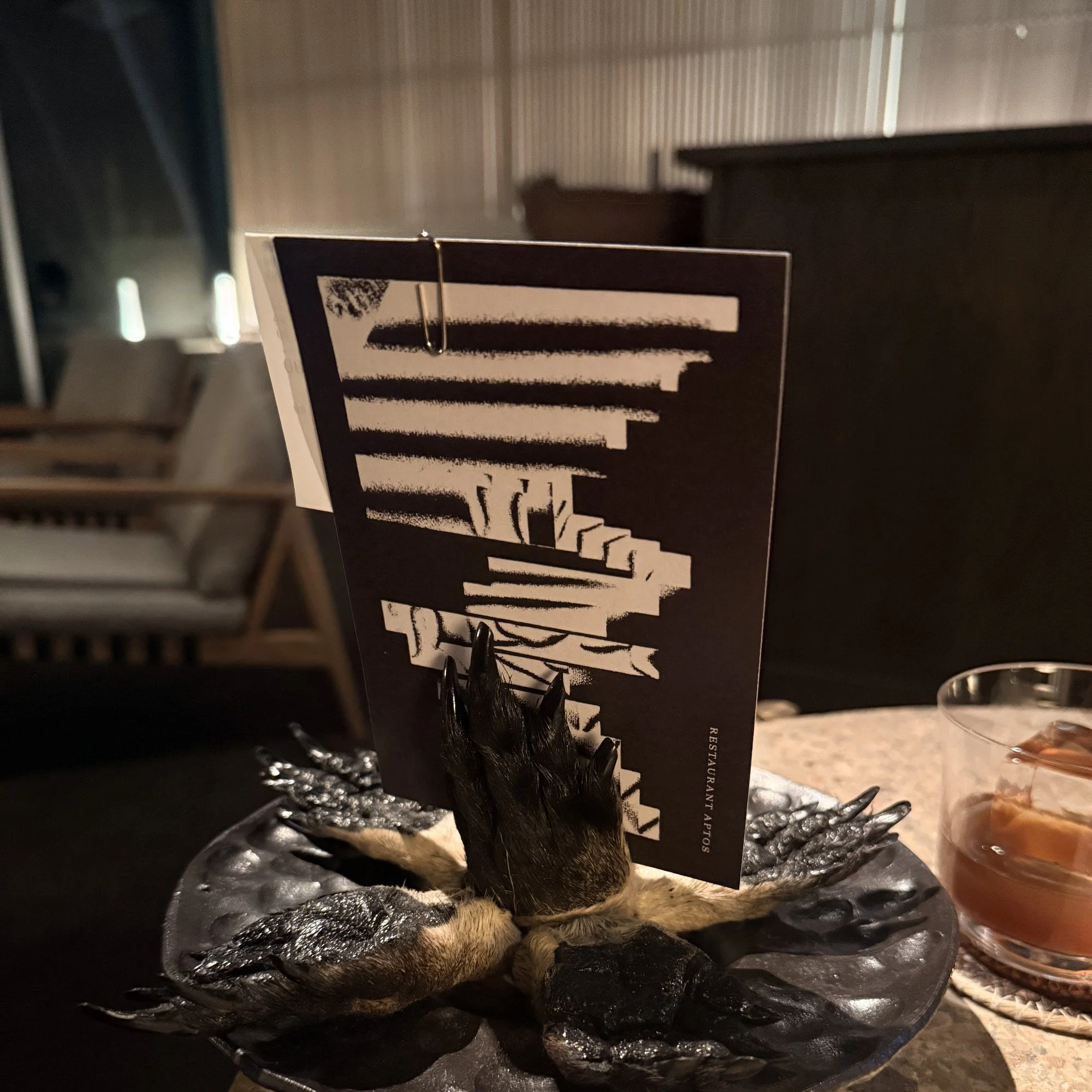
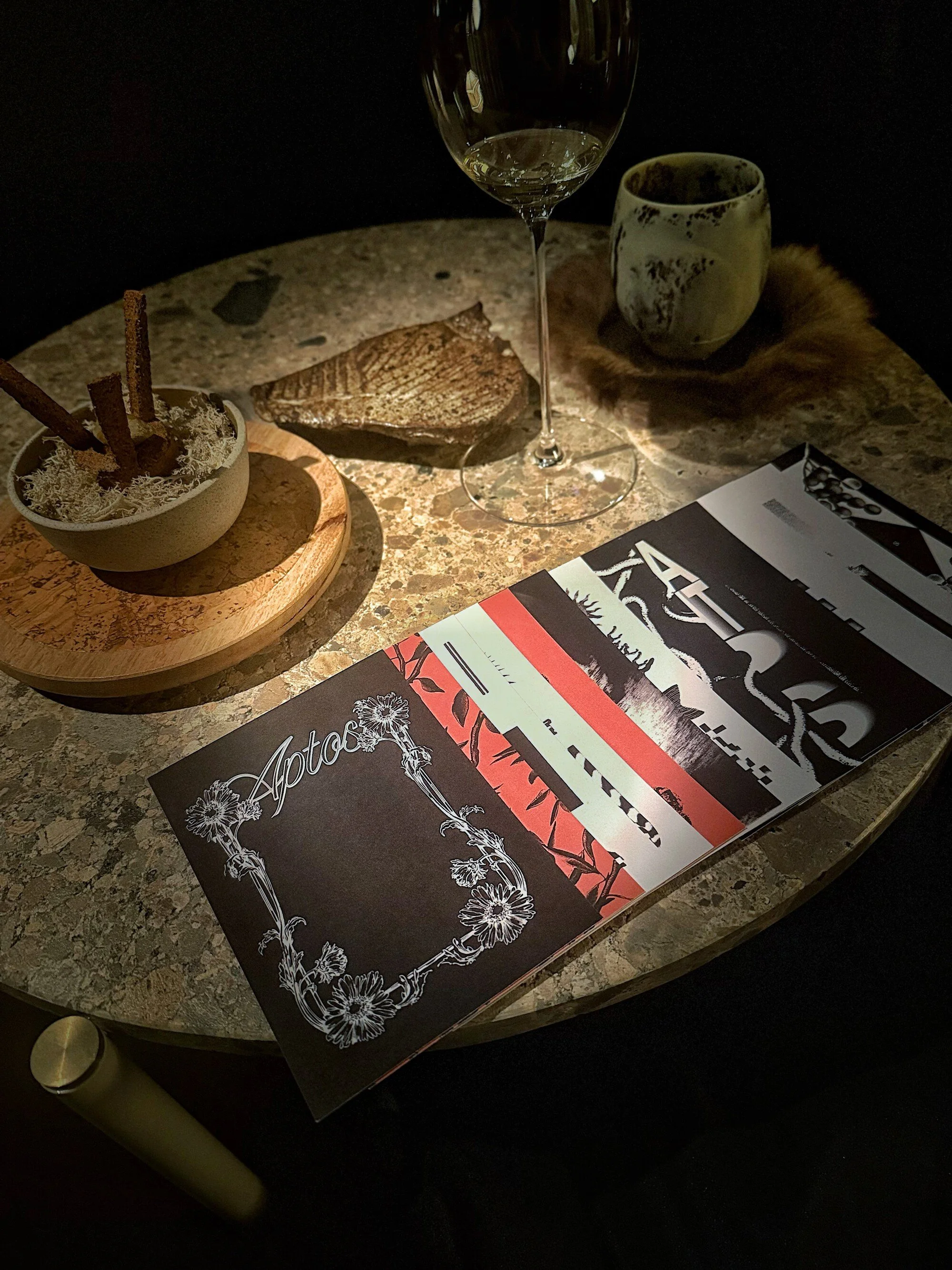
The first course arrived in three parts, a showcase of native fruit from muntries, Illawarra plum, desert lime, quandong and sunrise lime. Dots of purée on a polished eucalypt log resembled a First Nations artwork; a gumnut held grilled, salted and pickled fruits; and a fruit leather wrapped a lemon myrtle leaf. Each course came with a postcard explaining the dish and how to eat it; lick, suck, peel in this case. It was an exquisite tactile experience that cleansed the palate for the courses ahead, but ultimately too tart for my taste.
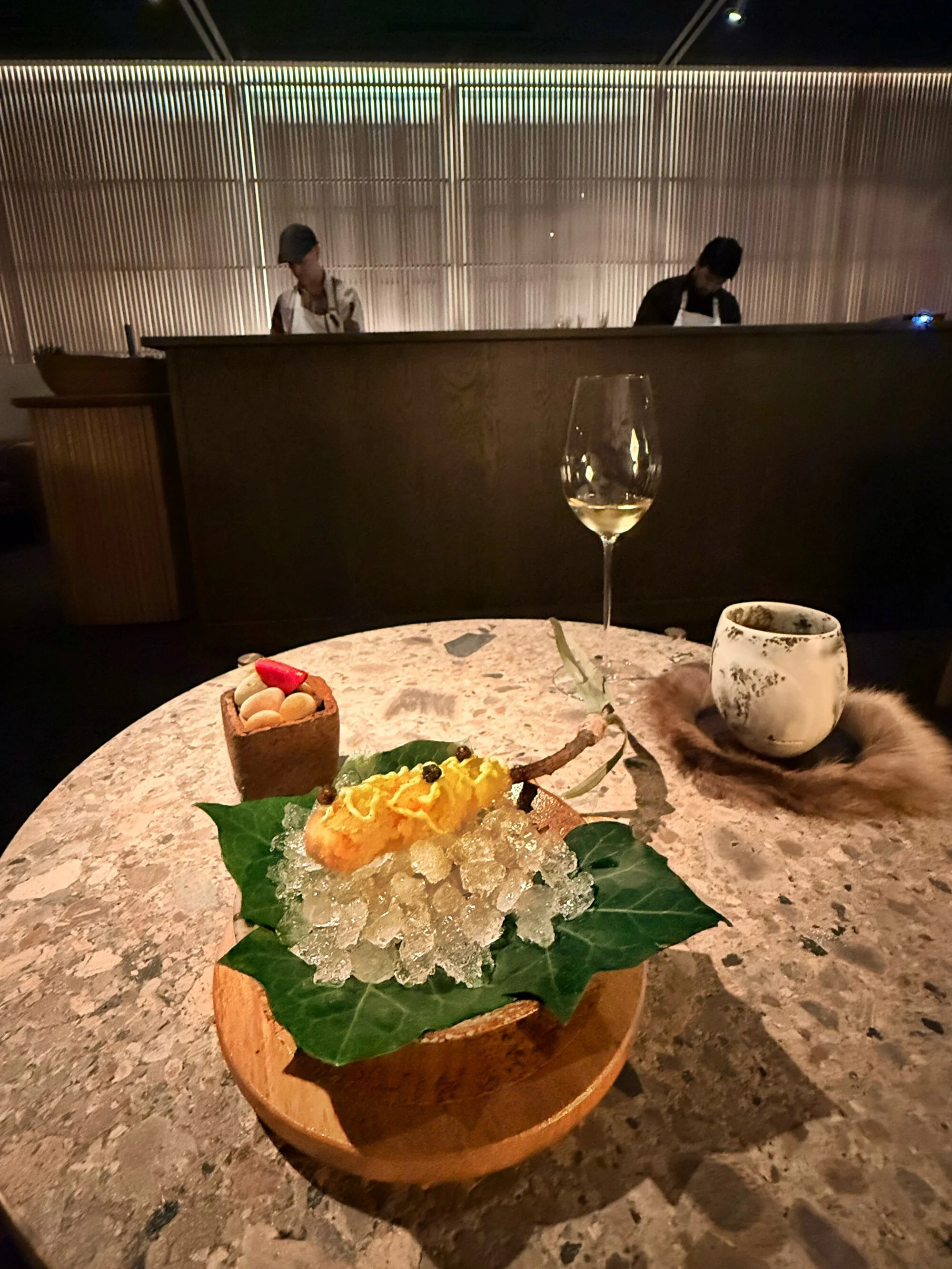
Next was slow-cooked, miso-marinated greenlip abalone, skewered on a twig held by abalone shells; lightly charred, glazed with grilled desert lime and finished with green ants and parsley. It signalled a kitchen willing to take risks, and here it paid off. Abalone is more often overcooked than not, yet this was remarkably tender despite being served cold. Green ants can be more gimmicky than meaningful, but their microbursts of acidity layered with the soft citrus harmonised superbly with the smoky, salty notes.
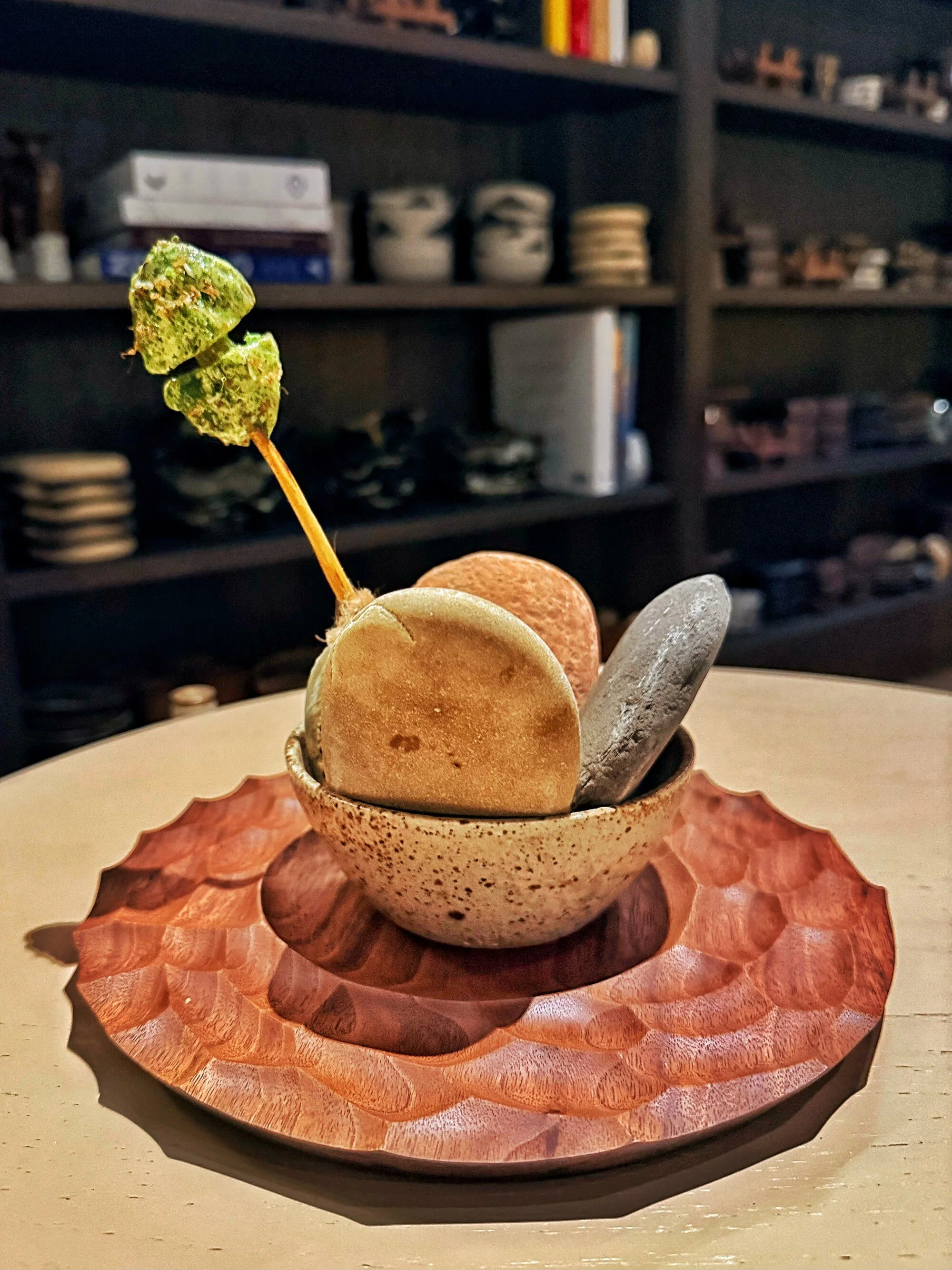
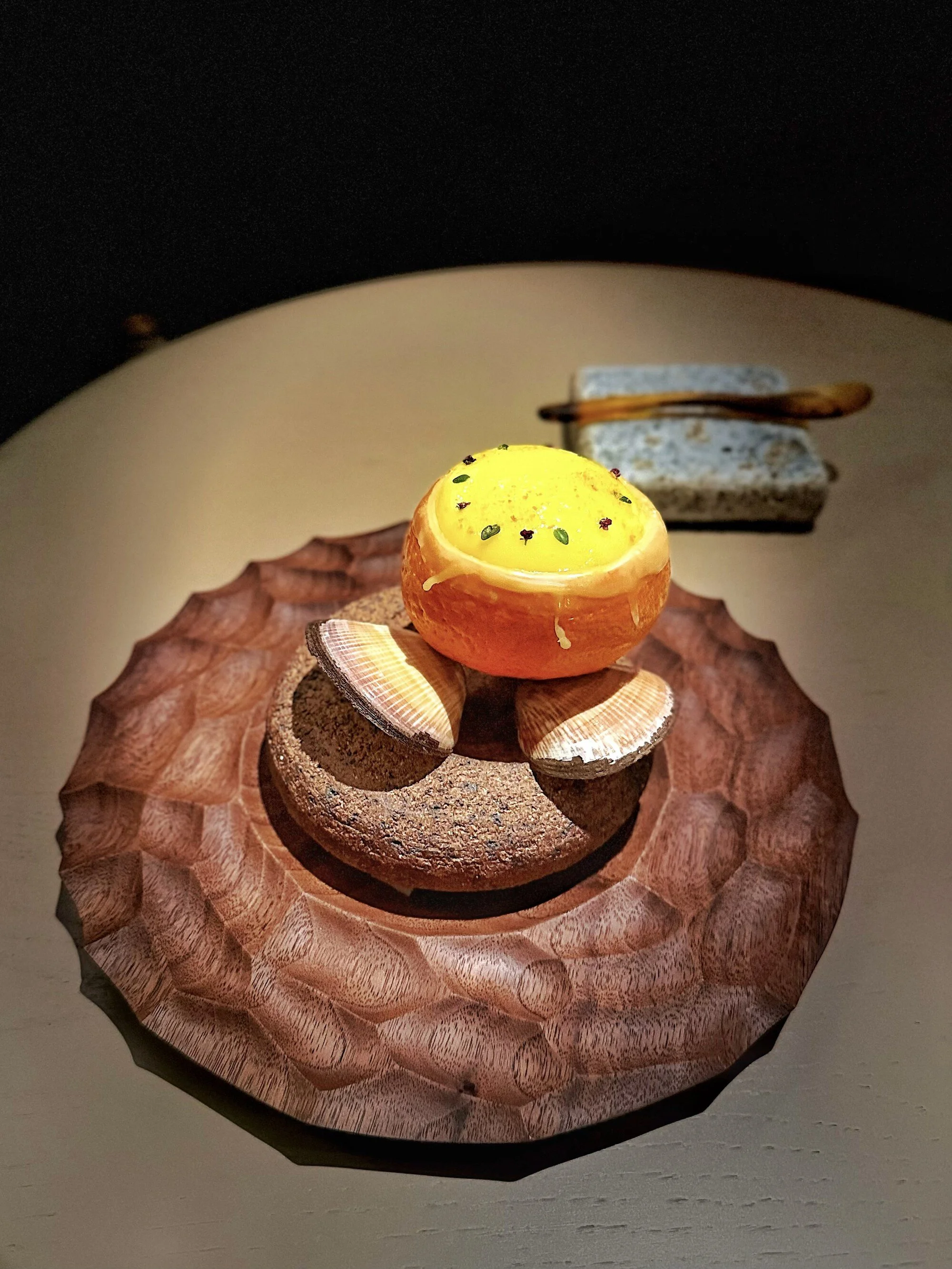
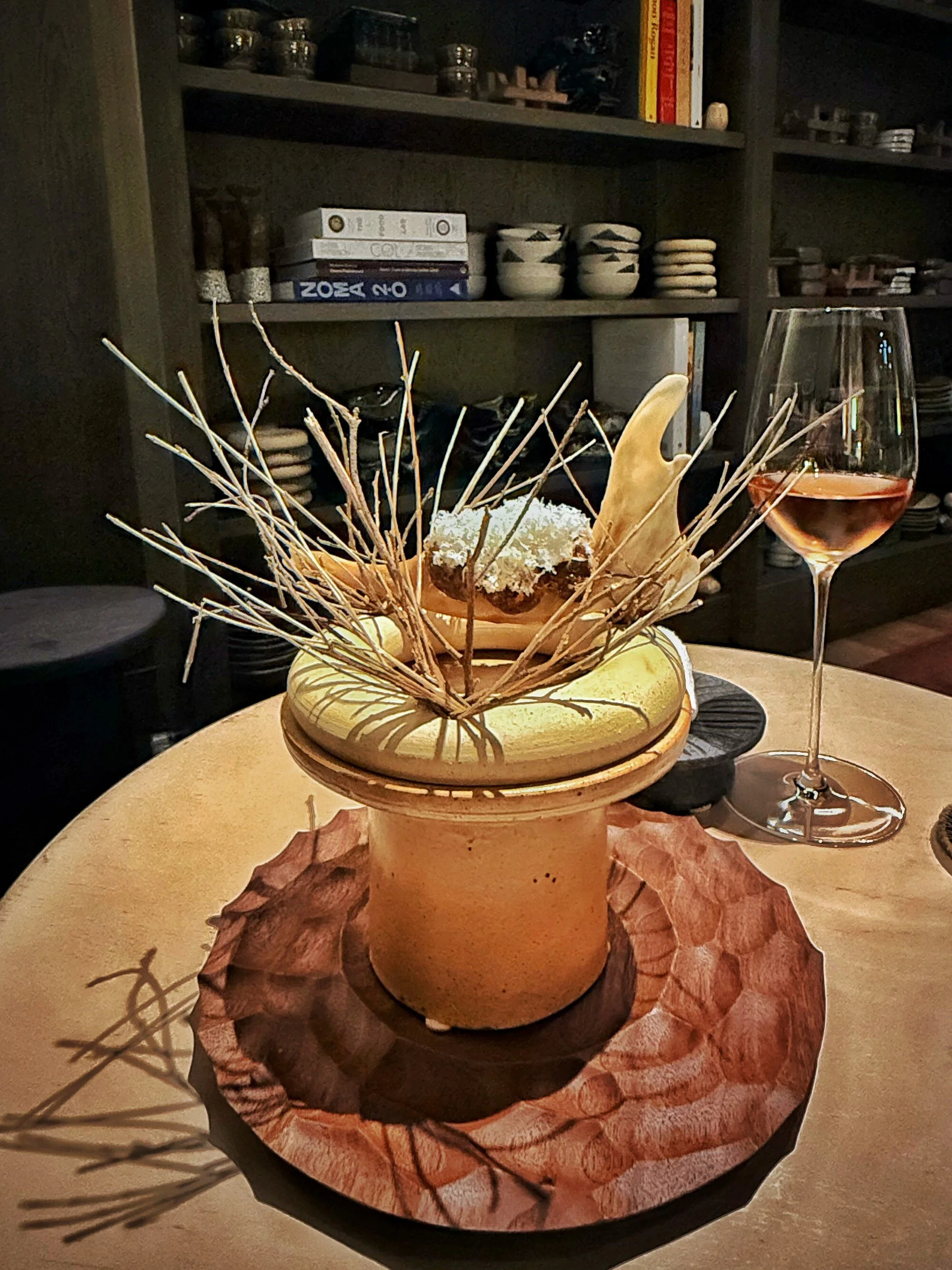
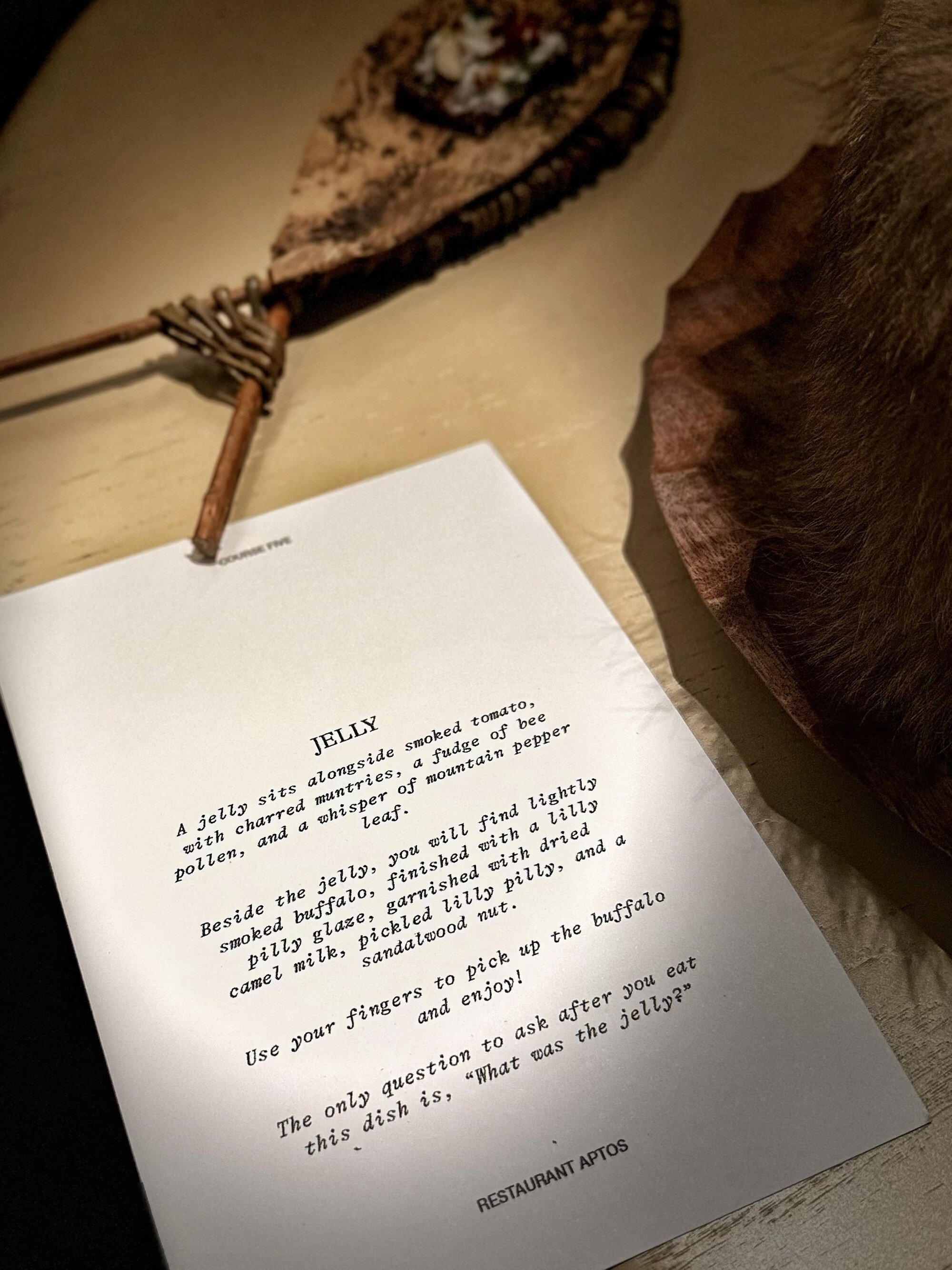
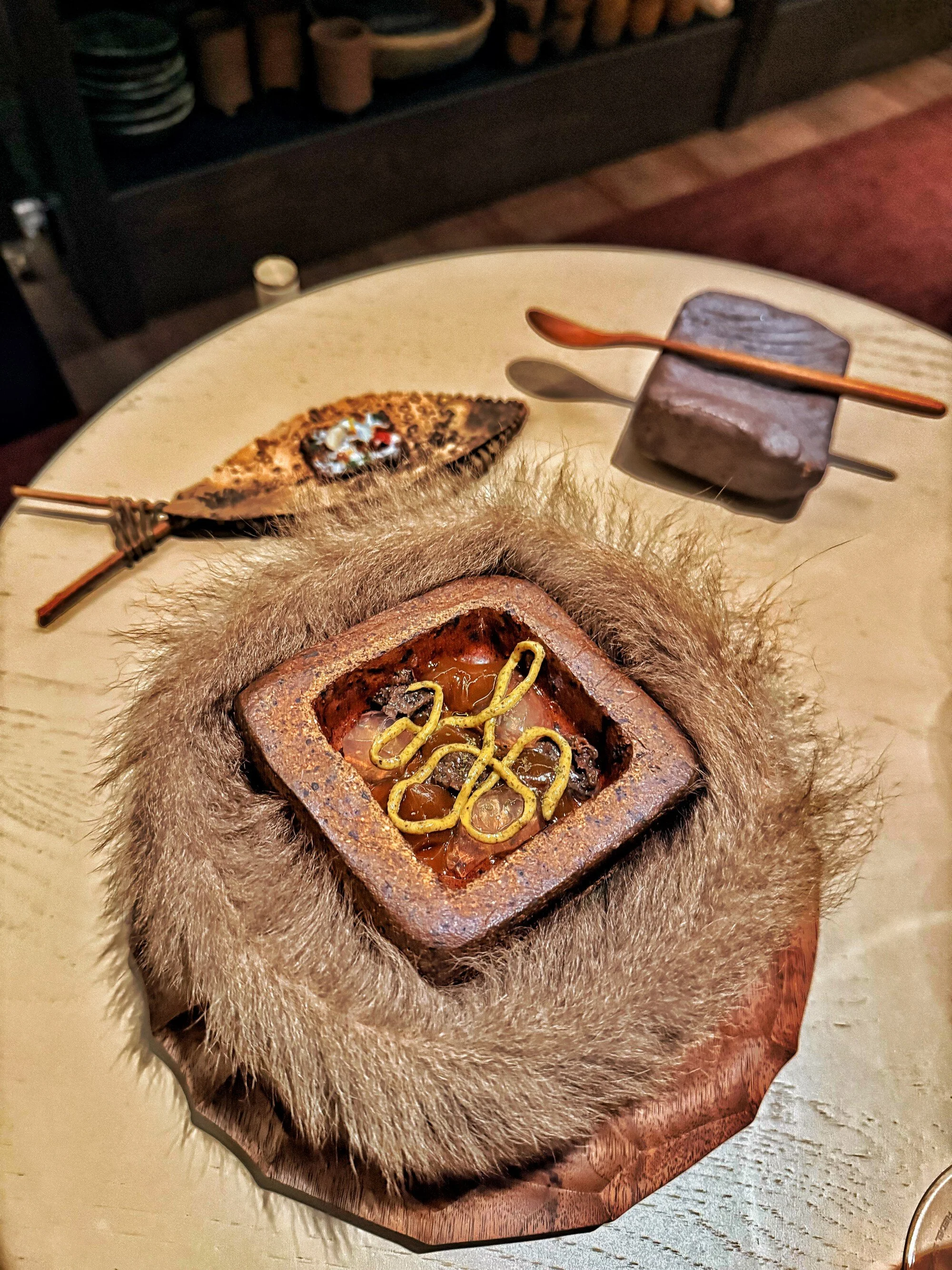
The remaining opening acts swung between extremes. The bluefin tuna and flame cockles in a beeswax-coated mandarin lost both the seafood and the mandarin’s sweetness beneath a vibrant blood lime emulsion. The wild venison tartare with chilli and green ant paste was a flavour sensation eaten straight off a deer jaw, though chasing macadamia shavings mid-air without cutlery was rather awkward. The jelly, in a kangaroo fur-wreathed vessel, challenged me to guess its savoury flavour (I won’t ruin the surprise). The smoked buffalo tenderloin alongside was delightful, but the jelly itself was unpleasantly salty for my taste.
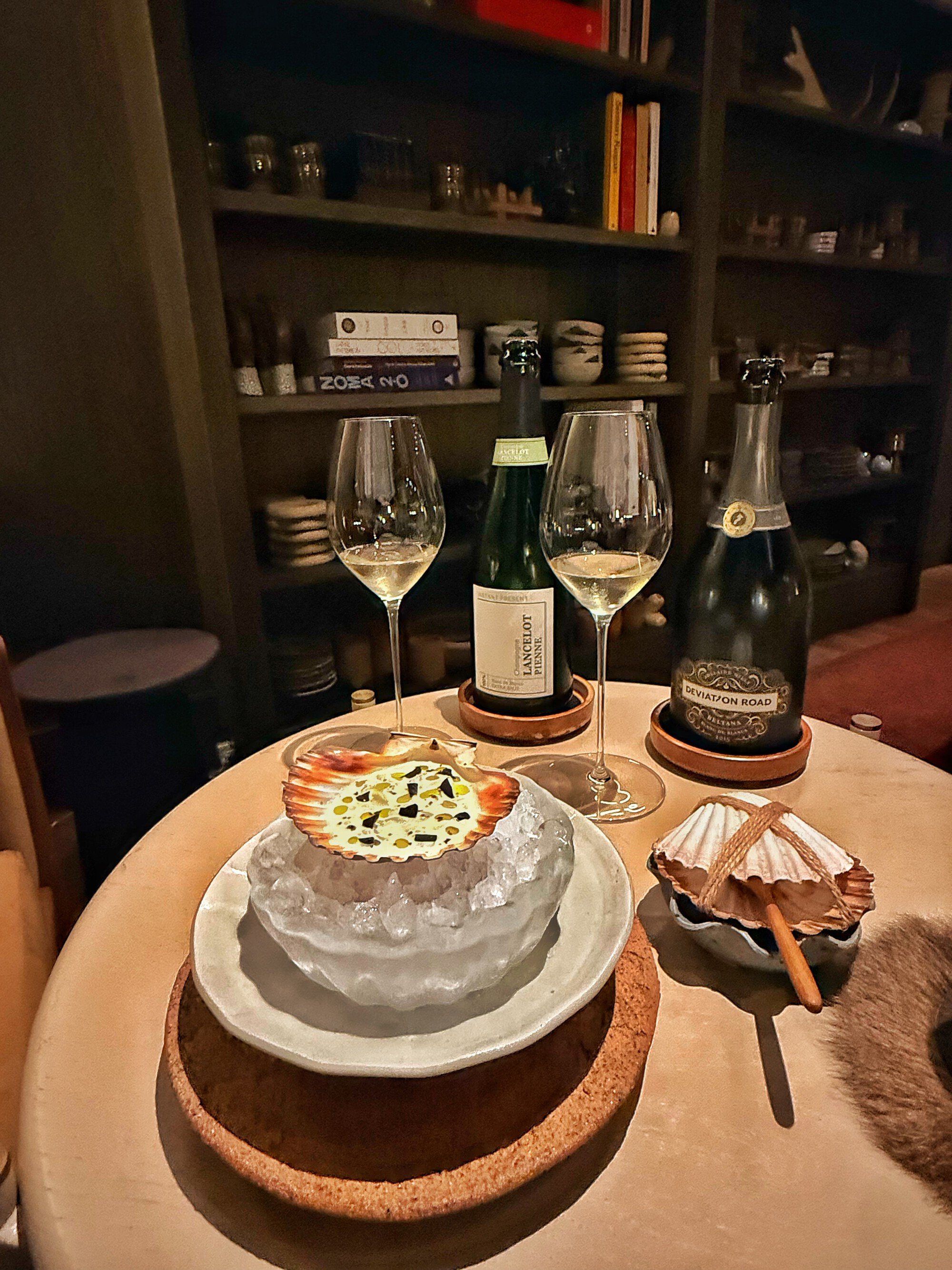
The scallop in a half shell was the pinnacle of the six: lime-cured scallop and fermented heart of palm, lifted by lemon aspen granita, jalapeño, anise myrtle and an exceptional smoked cream. It was a virtuosic balance of manifold flavours that still heroed the delicate main character – easily one of the finest expressions of scallop I have encountered.
The Library, then, was a mixed bag, with acidity and salt the common threads in the lowlights. Curiously, the sharpness of the tuna took me straight back to Eleven Madison Park in New York a decade ago, where I still remember the sour notes from the menu most vividly. Imagine my surprise when, after I shared candid feedback with Justin, he revealed he had spent several years in that very kitchen before joining Vue de monde!
Chapter Two: The Dining Room
I descended the stairs, past a pitchfork sculpture by South Australian artist Julia Robinson, into a lofty room layered with stone, timber and marble. A fully open kitchen with a mirrored exhaust sits centre stage, and custom oak and leather Atlas Harmonic speakers play tunes curated by Justin and founder Atlas Gouverneur. The handmade Mat & Kin furniture tell their own story, from the dining tables to the maître d stands.
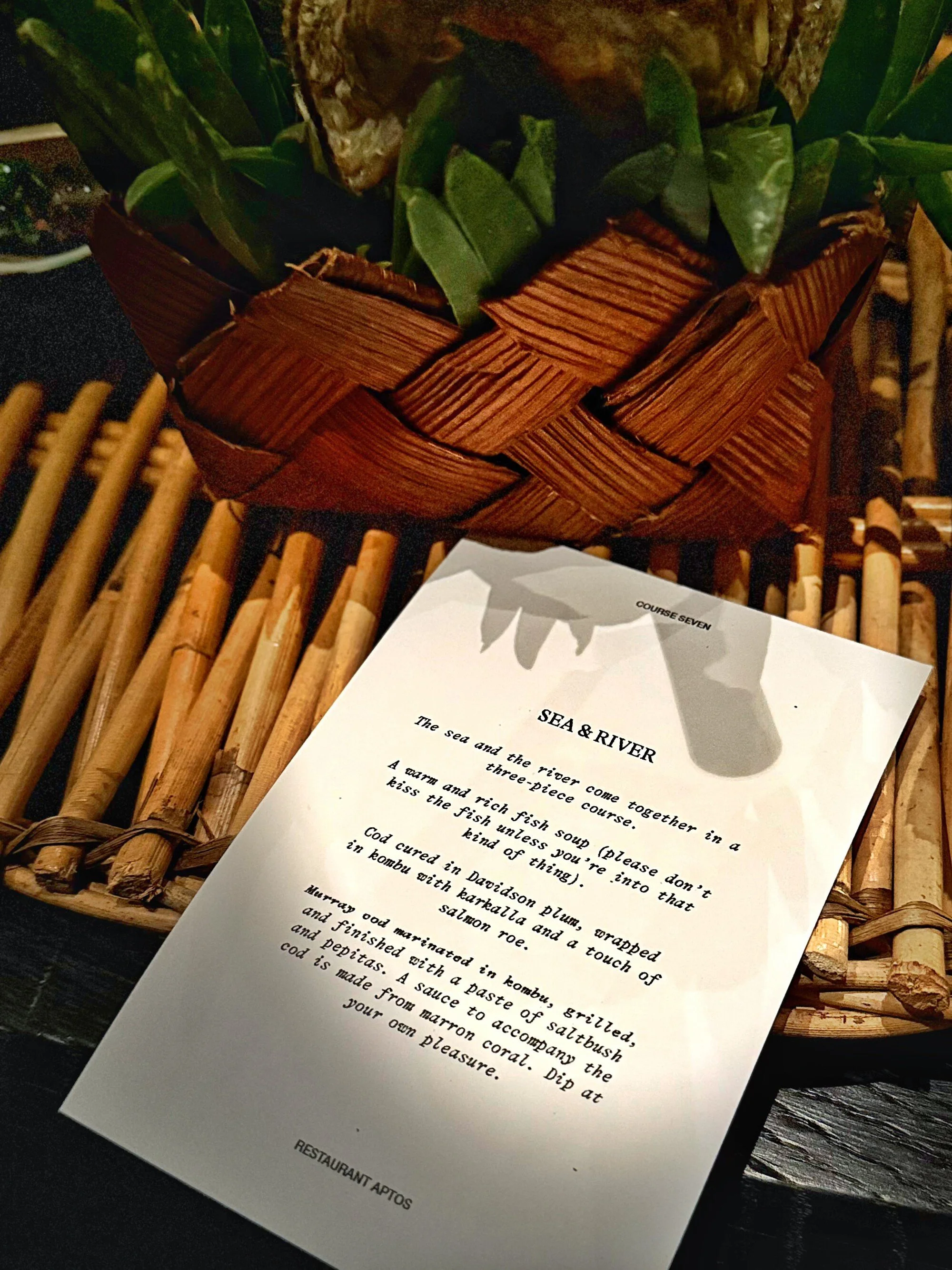
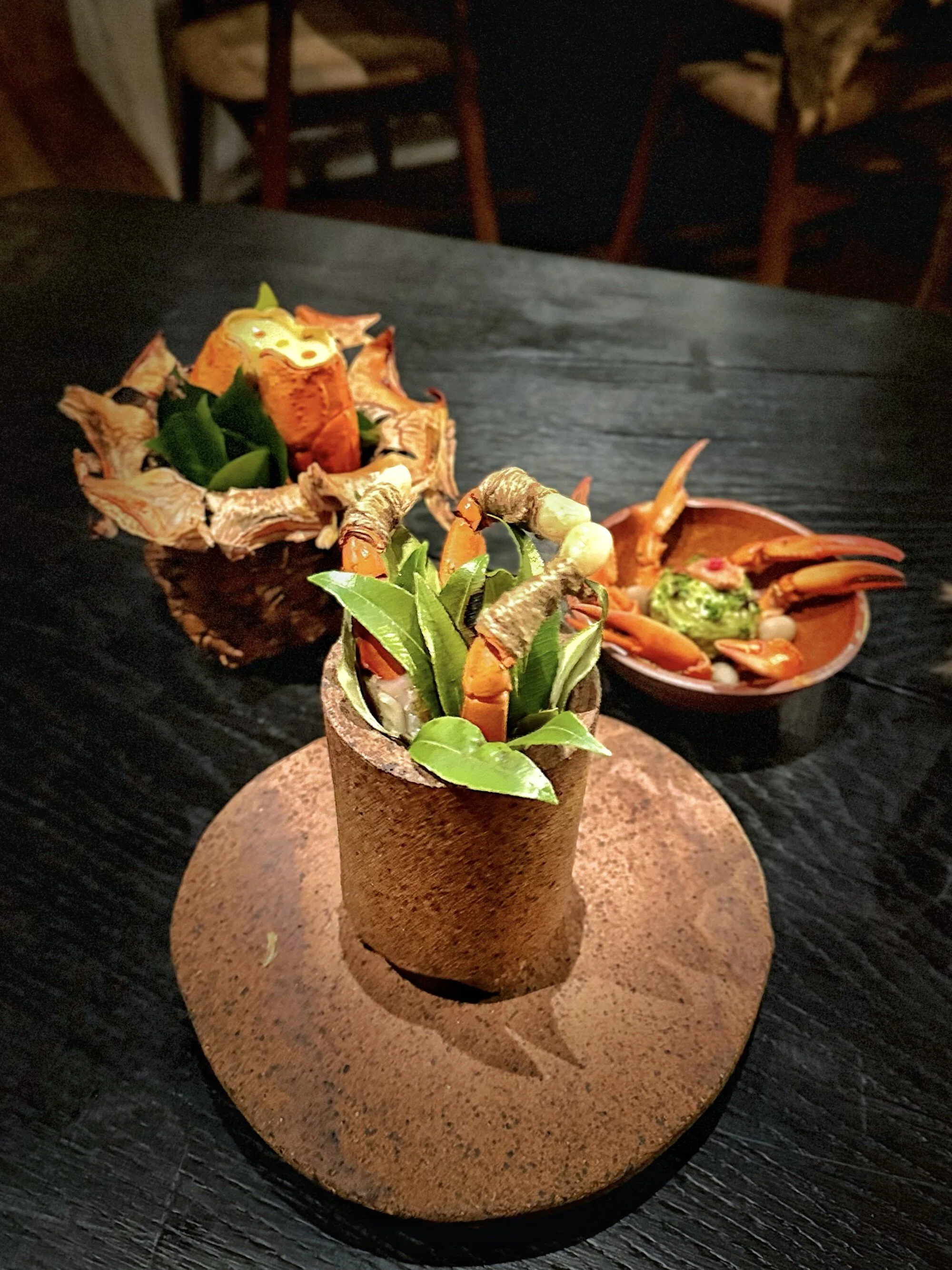
Five courses were served here: Murray cod, prawn, crocodile, kangaroo and Wagyu, and marron. Each was virtually flawless in concept, flavour and presentation, and the element of discovery is worth protecting for anyone who visits, so I’ll share only two.
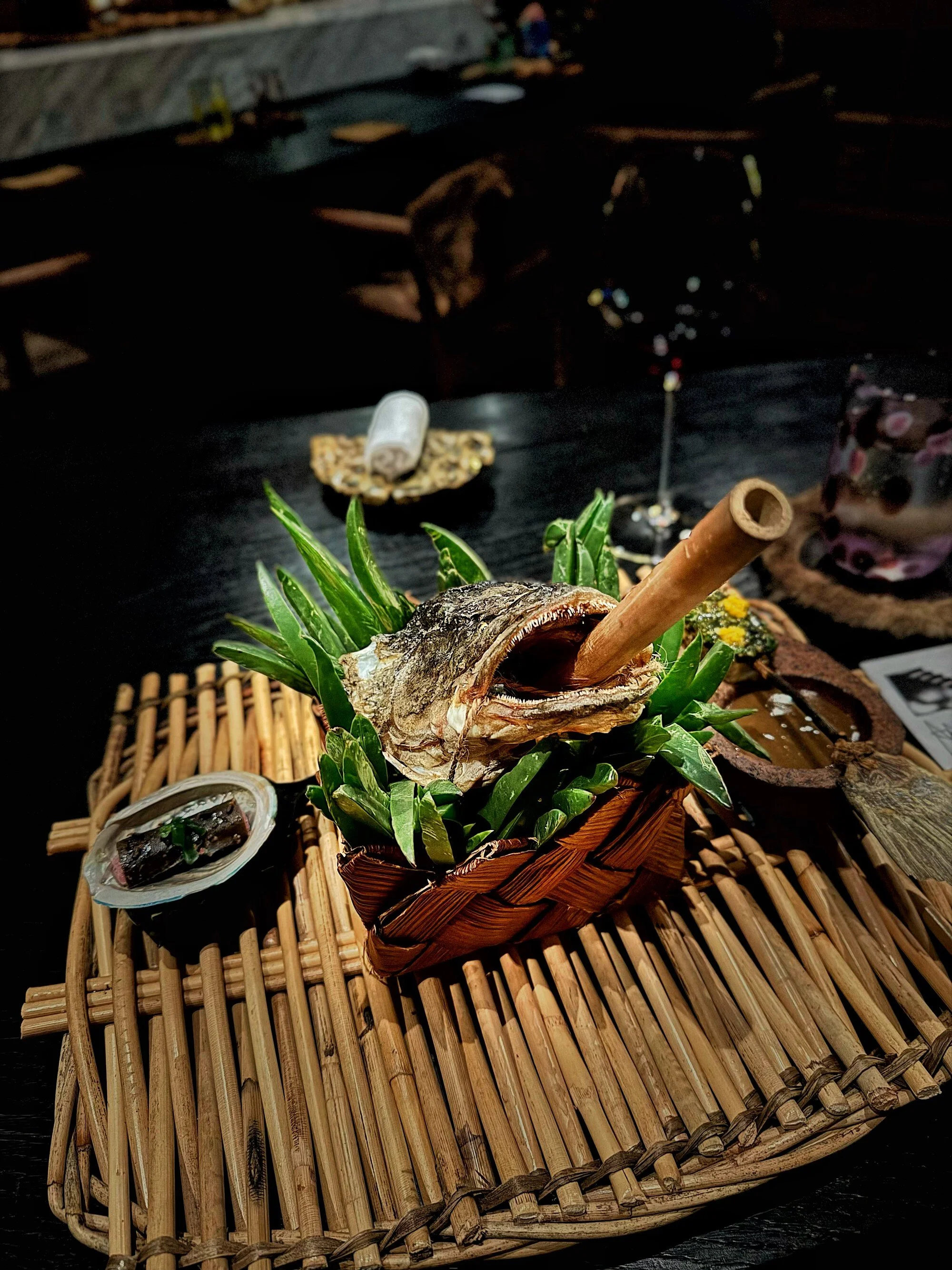
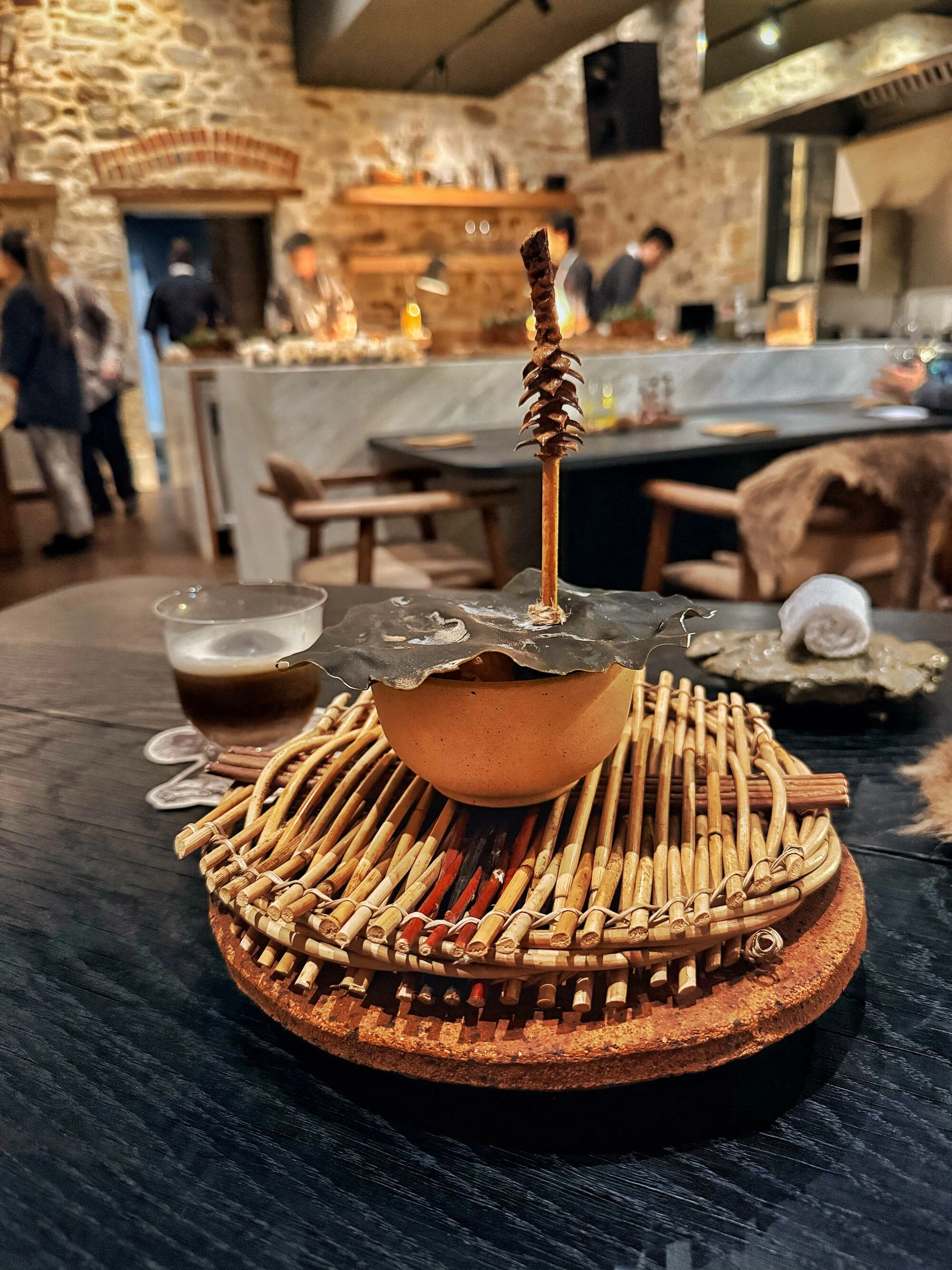
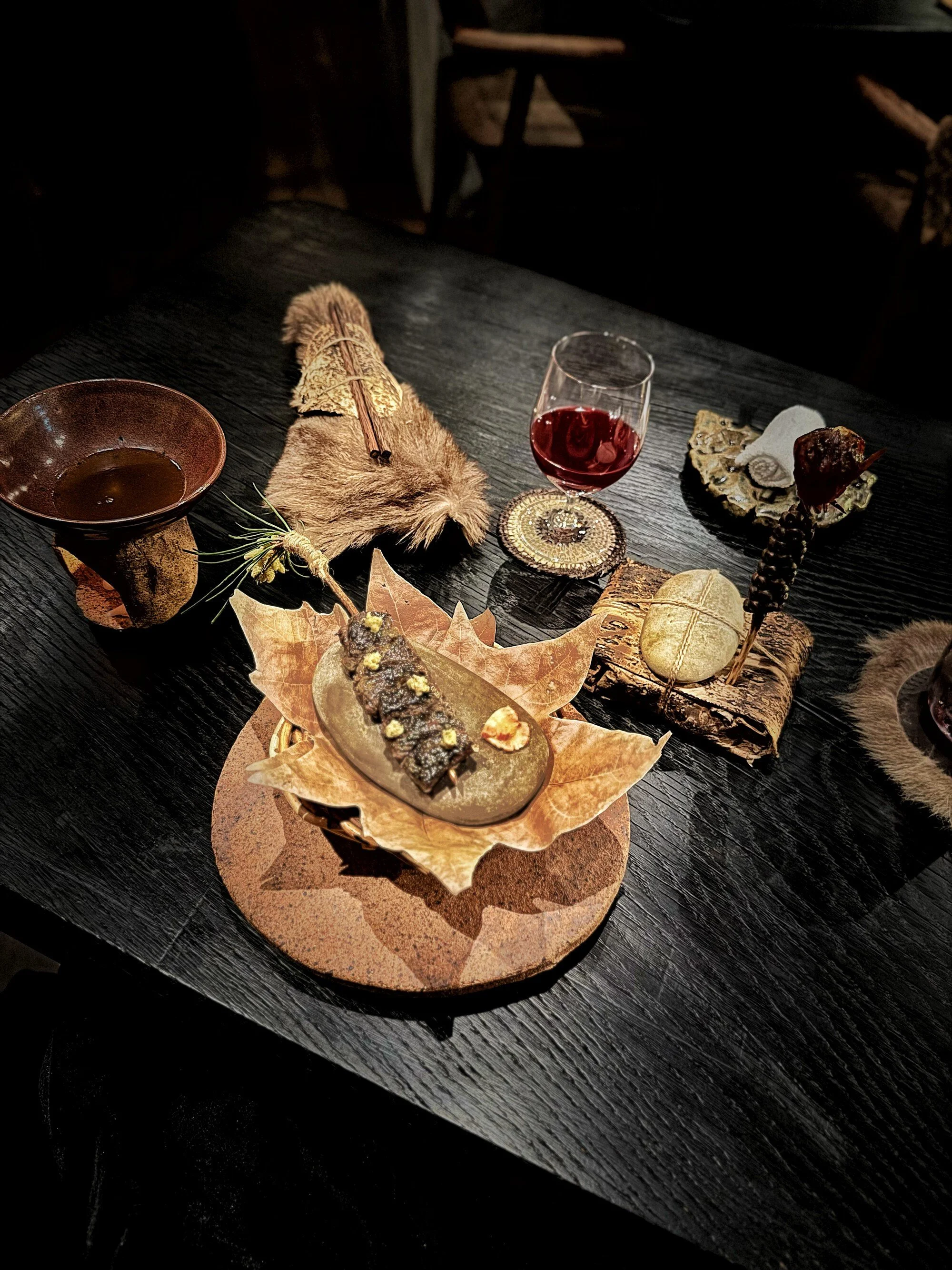
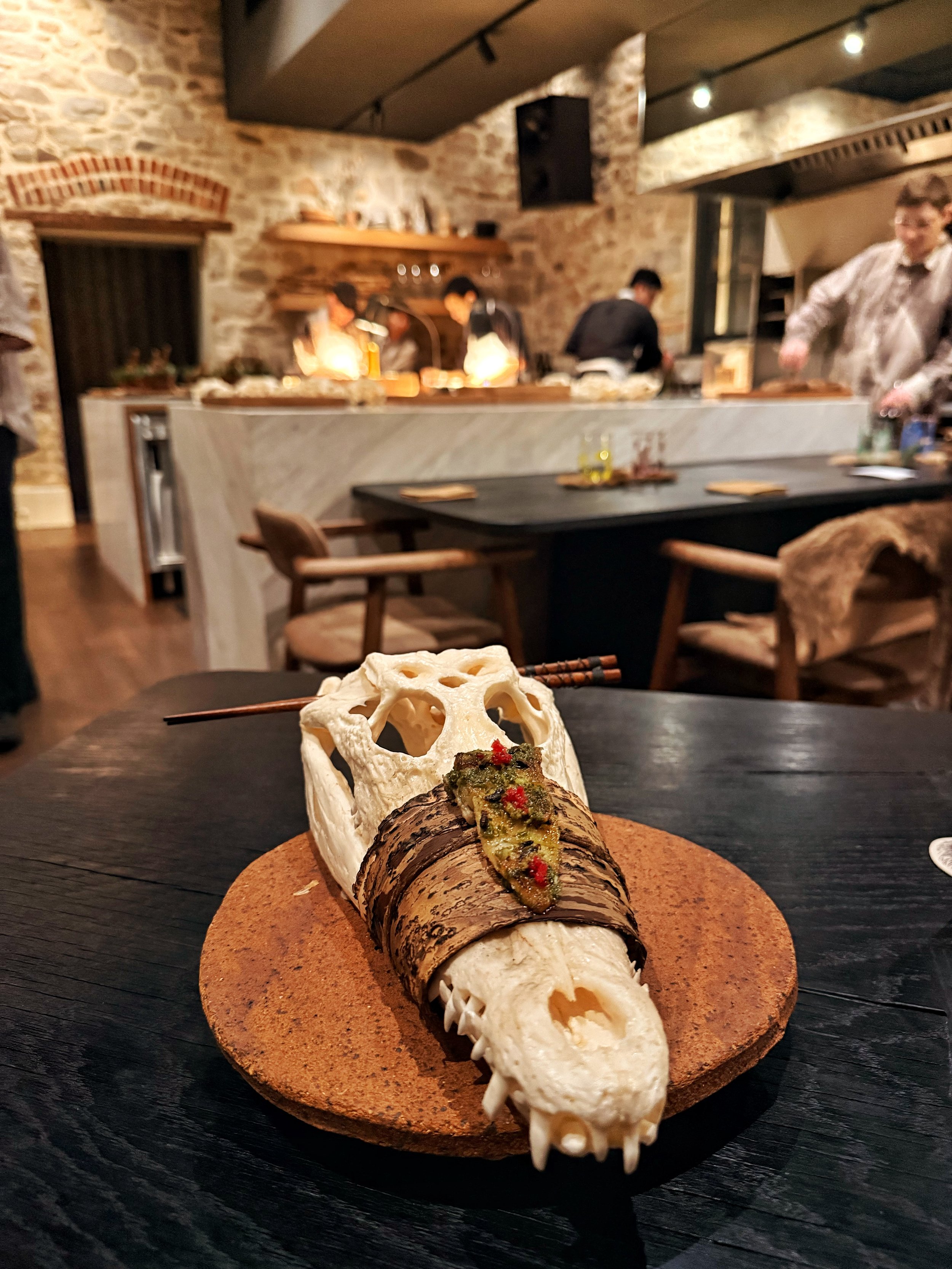
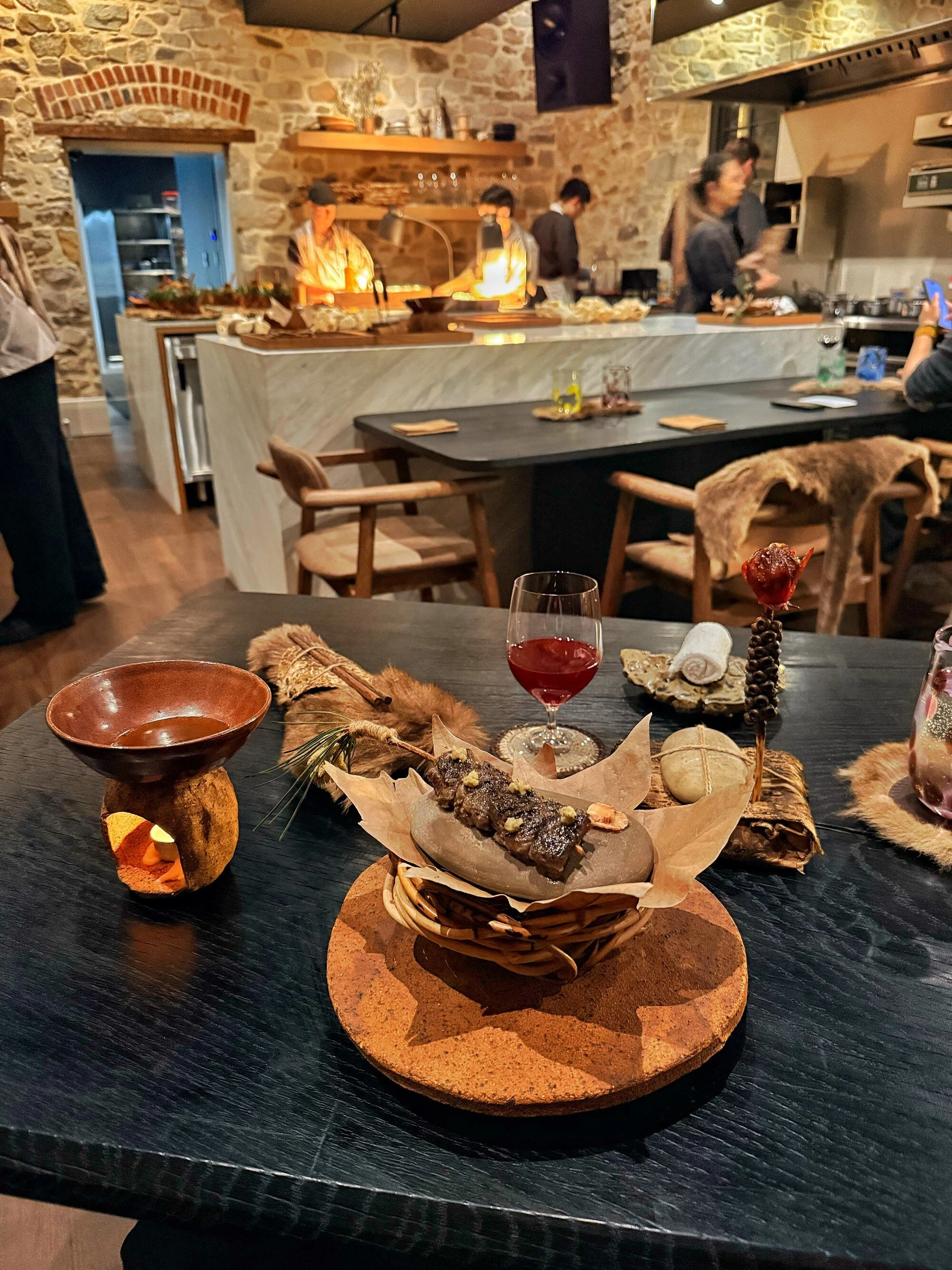
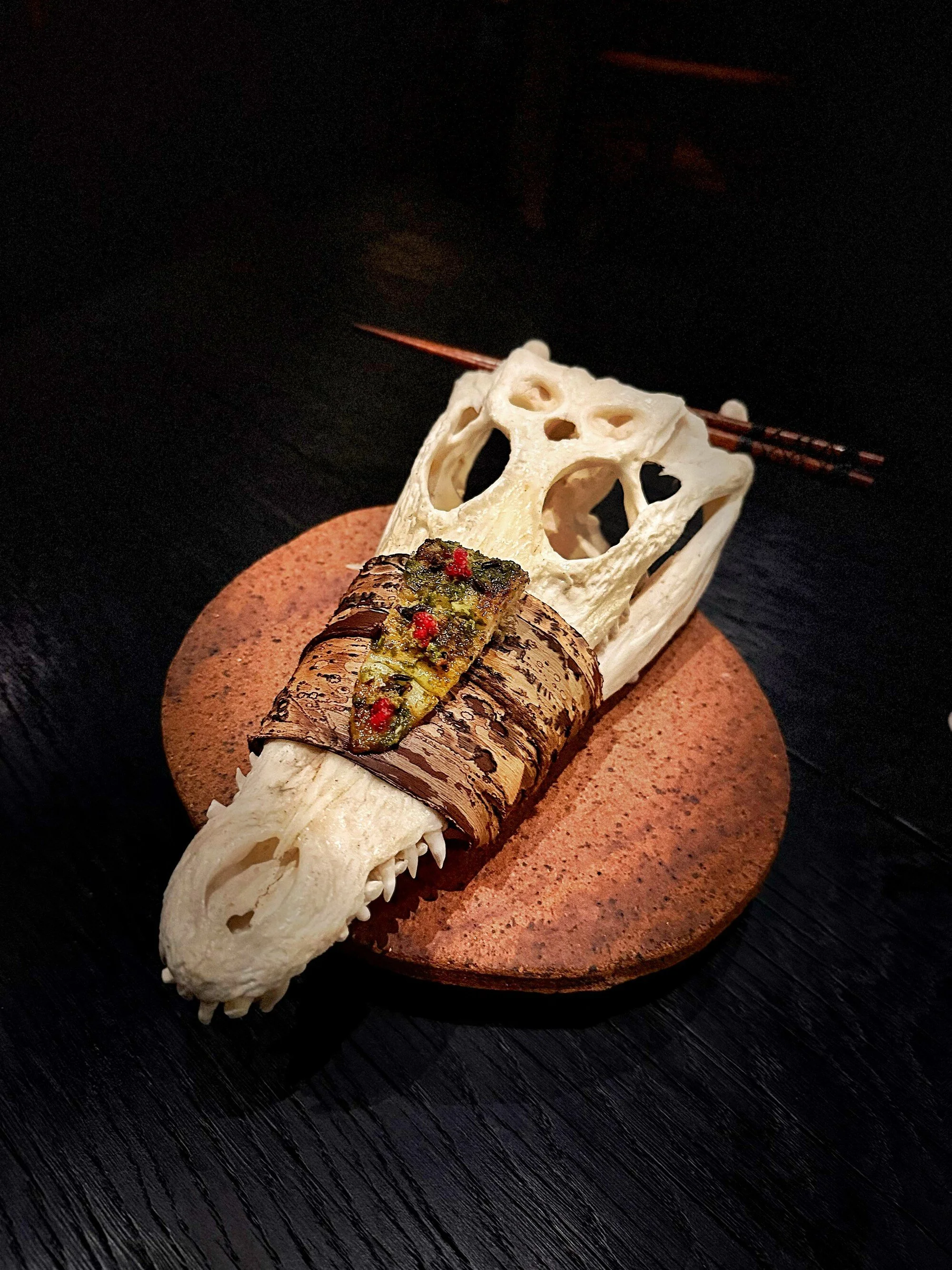
‘Crocodile Tears’ was slow-cooked crocodile tongue served on its own skull with chopsticks and Geraldton wax in three forms (grilled, chimichurri and kosho). The texture was gelatinous, the umami lingering, and it earned bonus points for broadening my palate.
‘Marron and Myrtle’ came in two parts: a macadamia salsa macha-glazed tail skewered on the claws and dipped into a warm lemon myrtle béarnaise; then a savoury doughnut glazed with curry leaf and topped with claw meat. Succulent, harmonious and refined, it was the single best crayfish dish I have had.
The Dining Room exceeded expectations of an immersive, sensory experience: each savoury creation bold in its own character, yet still cohesive as a whole. The media coverage has made much of the ‘no cutlery’ approach, and admittedly I wondered if it would feel gimmicky. But there are chopsticks and spoons, and you aren’t licking, sucking or slurping every course as your socials might have you believe.
My one wish is a stronger emphasis on provenance. Winemaker stories accompany the pairings, but several times I found myself asking where the food came from. The Wagyu was introduced as a Queensland brand I didn’t recognise, partly due to a pronunciation I couldn’t place. It was only a mention of a citrus-fed cow that led me to (correctly!) guess Sir Harry Chauvel. Justin, by contrast, served the jelly course himself and told the story of the Northern Territory’s wild buffalo, where it is considered a pest. It was engaging, and with dining at this level, I’d love to hear more stories like it – particularly with international visitors set to arrive once the Michelin Guide lands in South Australia.
Chapter Three: The Lounge
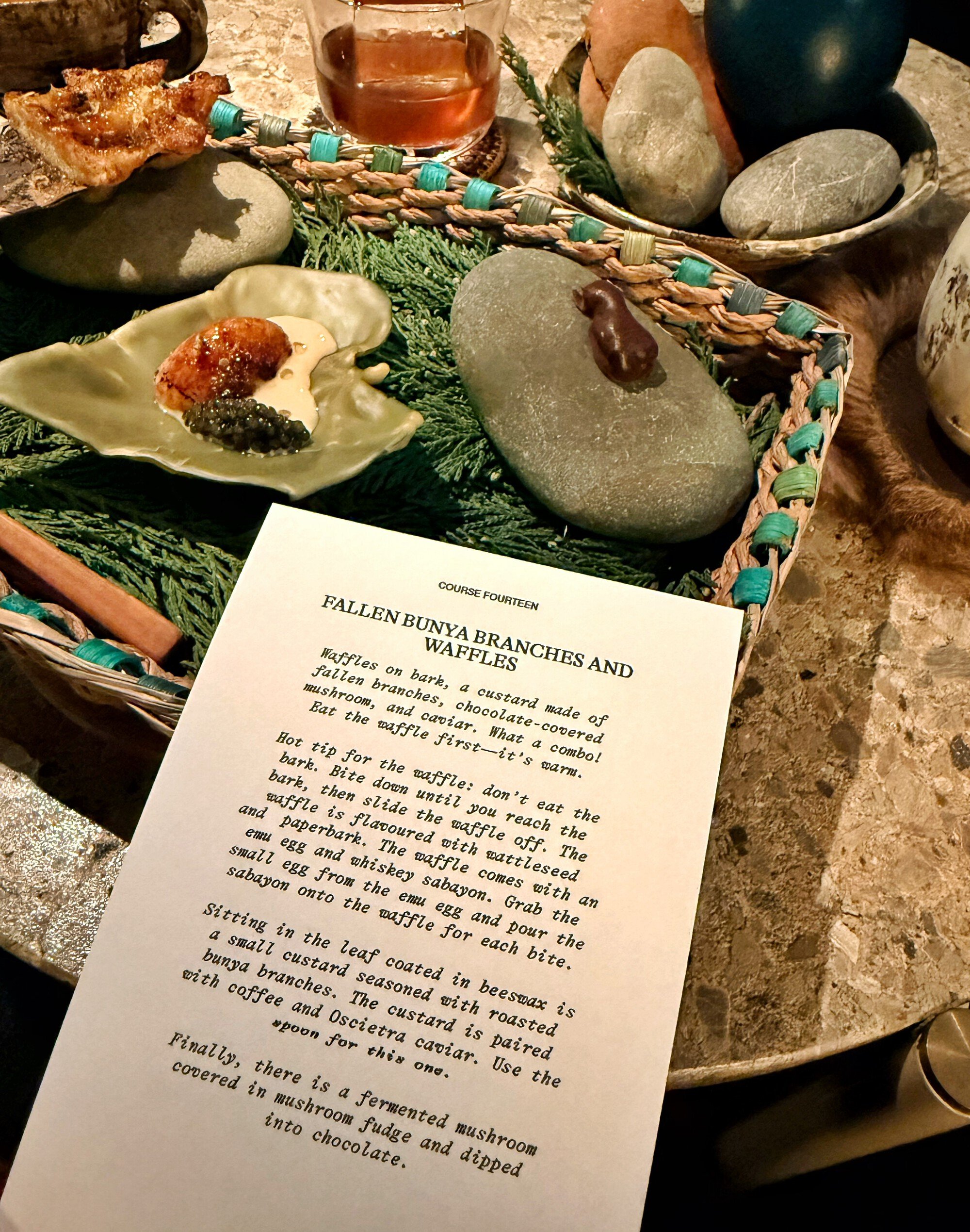
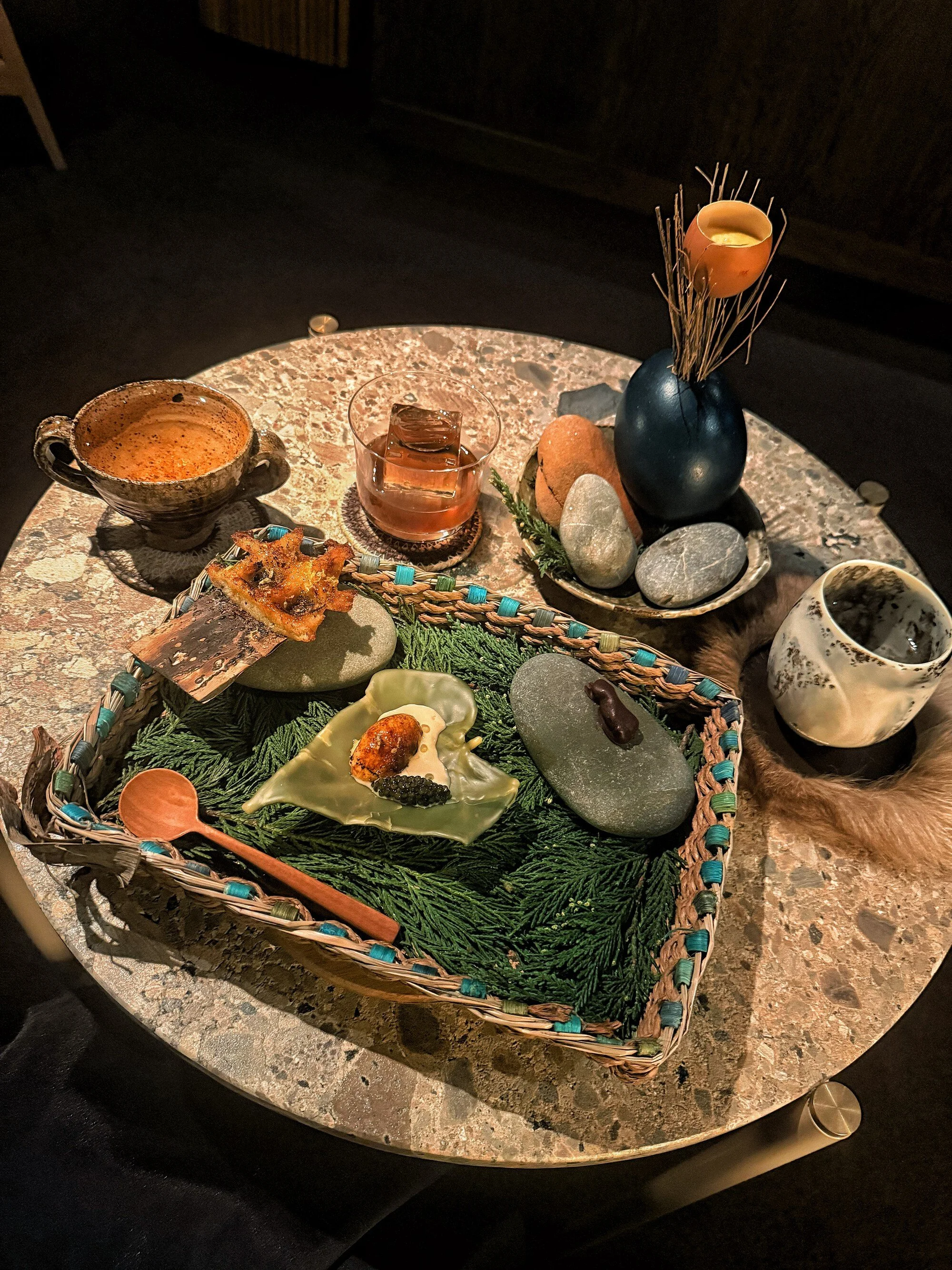
The final four courses were served in a relaxed bar lounge, a worthy finale that invites you to linger. In Aptos style, the desserts extended beyond sweetness to something refreshing, herbaceous, even a little bitter, with the wattle seed and paperbark waffle a highlight. Service was first class, a balance of polish and personality, and the team packed my 15 cards into a bag with some thank-you goodies, a souvenir of the journey.
The Epilogue
The hybrid pairing was mostly hit, with a few misses. Some mocktails were too sweet, but others, like the tomato water, confit olive and hazelnut oil, were just right, and the wines were spot on. My solo dinner came to $730 including drinks, a significant outlay – but on the world stage I dare say the collective experience represents good value.
This year I’ve been fortunate to visit restaurants ranging from one to three Michelin stars, and in my opinion, Aptos surpassed both two-star venues I tried. But given the guide has often been conservative with three stars in a debut edition (as in Bangkok and Dubai) and Aptos is only months old, my prediction is two stars will be awarded at this week’s inaugural ceremony. However, with time and the team’s current trajectory, I believe three is within reach.
The accolades aside, the more critical question remains: is it worth it? Without hesitation – Aptos delighted, intrigued and impressed me, and is certainly worth a detour for that momentous occasion, if not yet a special journey.
Thank you Chef Justin and the Aptos team, for your extraordinary dedication in crafting a culinary memory that will stay with me, and best wishes for the big night!
Visit their website: Restaurant Aptos