
+81 Sushi Kappo
259 Montague Road, West End
the digest
Order
Go all out with the Louis Roederer Cristal Vintage 2015 for arrival – $125 a glass may sound steep, but it’s very reasonable for a bottle that retails for over $500!
Pay
$450 per head for the sushi kappo omakase, plus drinks.
Consider
Arriving early for a pre-dinner drink at the adjacent Aizome Bar, or winding down in the private lounge afterwards.
Wear
Dress as you would for an omakase in Ginza, and keep fragrances subtle – the chef’s counter seats are intimate.
Reserve
Tuesday to Saturday, with sittings at 5.30pm or 8.30pm
Travel
Car - Ample parking on Jane Street
Bus – Nearest stop on Montague Road at Davies Park, 70m
Train – South Brisbane Station, 2km
full REVIEW
Opening a debut restaurant in Brisbane while positioning it among Australia’s most expensive omakase offerings is a confident statement. Choosing to delay the launch by almost a year until the right head chef could relocate from Japan? Even more so.
+81 Sushi Kappo quietly arrived on 6 December 2025 and will remain in soft launch mode until 5 February 2026. Like its sister venue, Aizome Bar – crowned Gourmet Traveller’s 2025 Best Bar of the Year – the ambition is unmistakable: to recalibrate Brisbane’s fine dining landscape. As someone who actively champions experiences that elevate our city, I approached my solo visit genuinely excited, but acutely aware of the stakes.
At $450 per person (excluding drinks), expectations are unavoidably high. This price point eclipses Attica, Yoshii’s Omakase, Vue de monde, the chef’s table at Saint Peter, Sushi Room and Minamishima. While it doesn’t technically claim the title of Australia’s most expensive restaurant (that honour belongs to Geeveston, Tasmania), the question stands: does +81 warrant the investment?
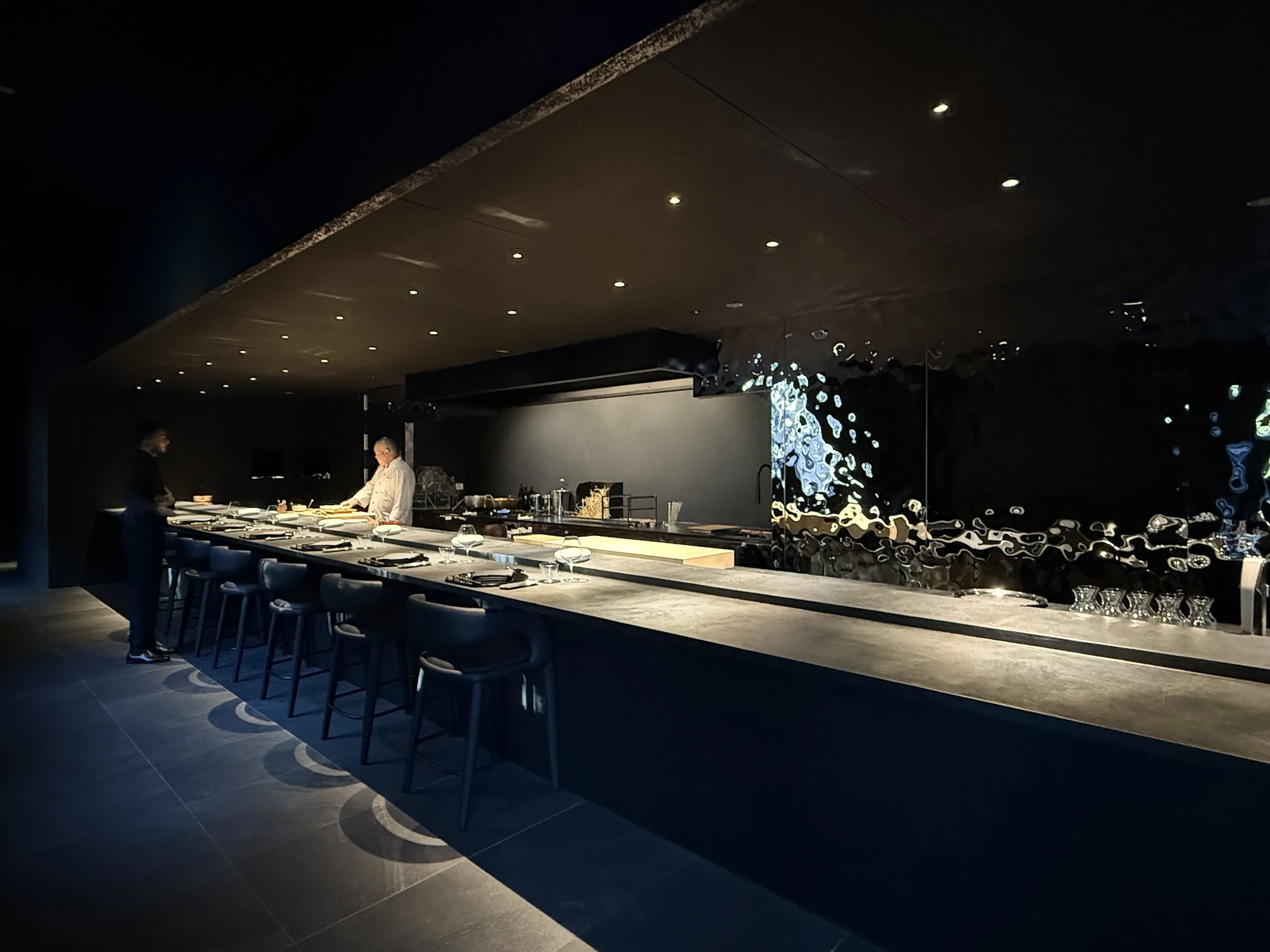
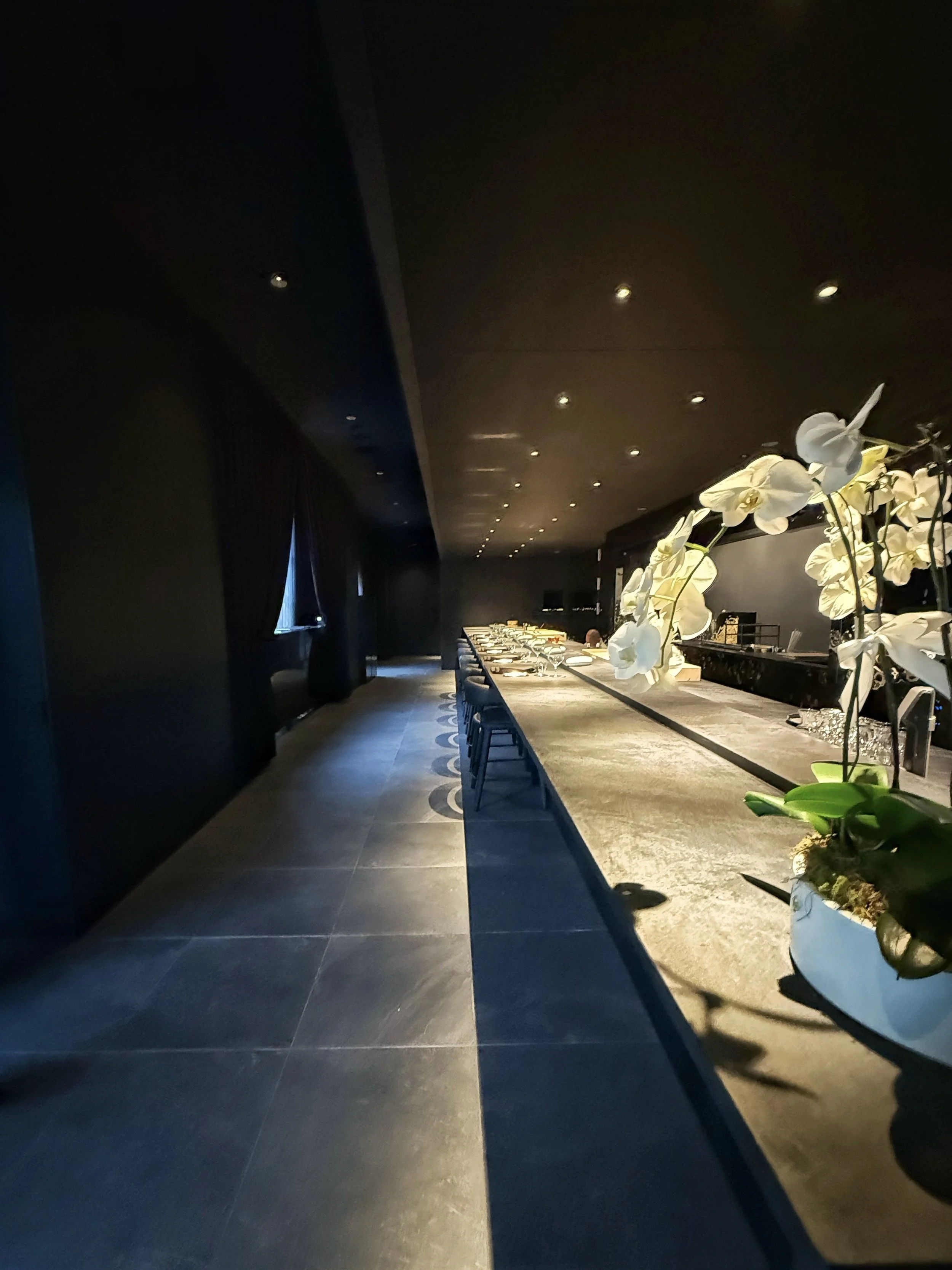
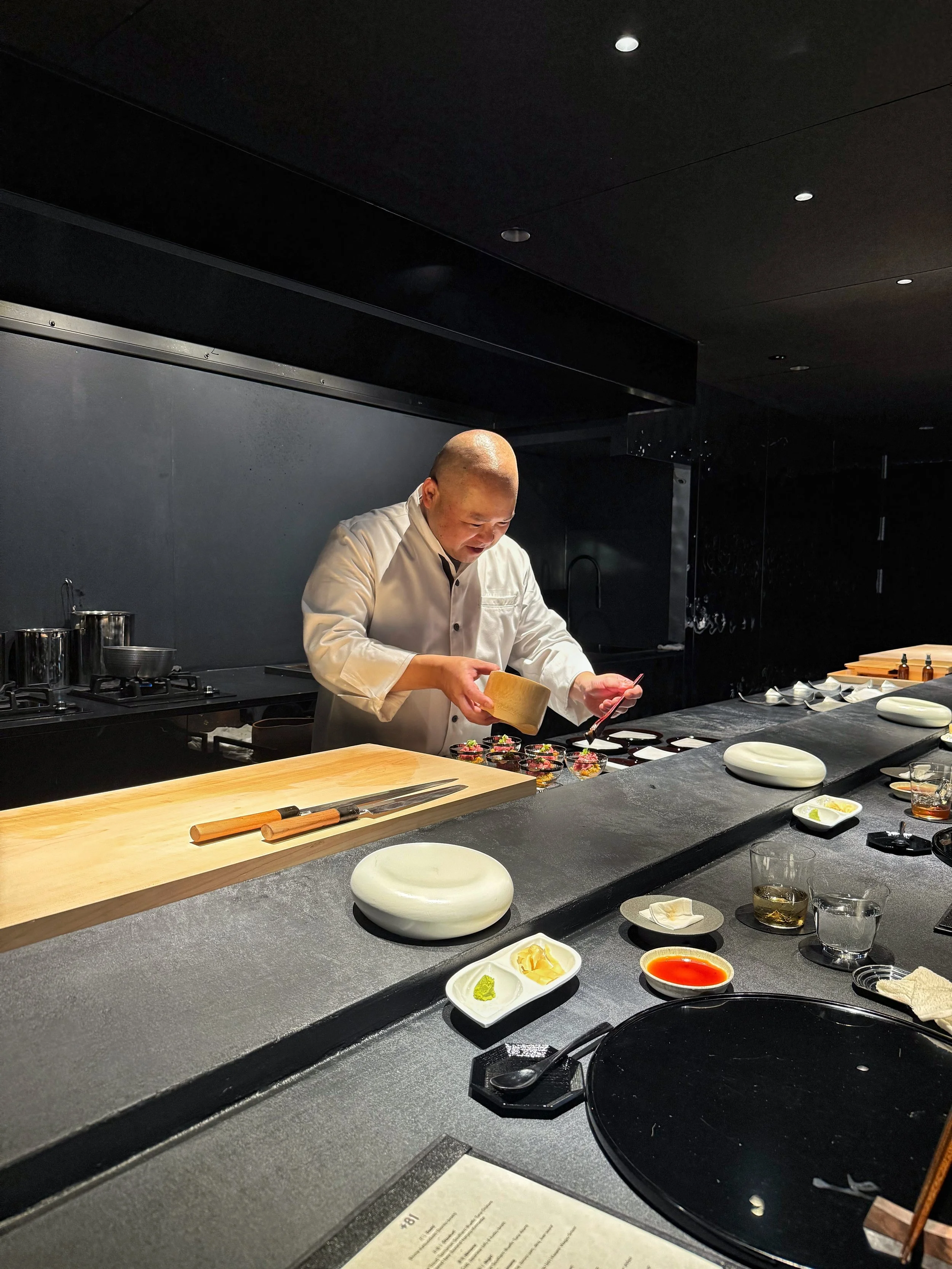
Stepping past the aizome blue bar lies a moody, intimate 12 seat kappo counter. Ambient lighting plays against a metallic accent wall, and each setting is curated with Japanese crafted vessels, Gabriel-Glas and Kimura glassware – refined, considered and elegant.
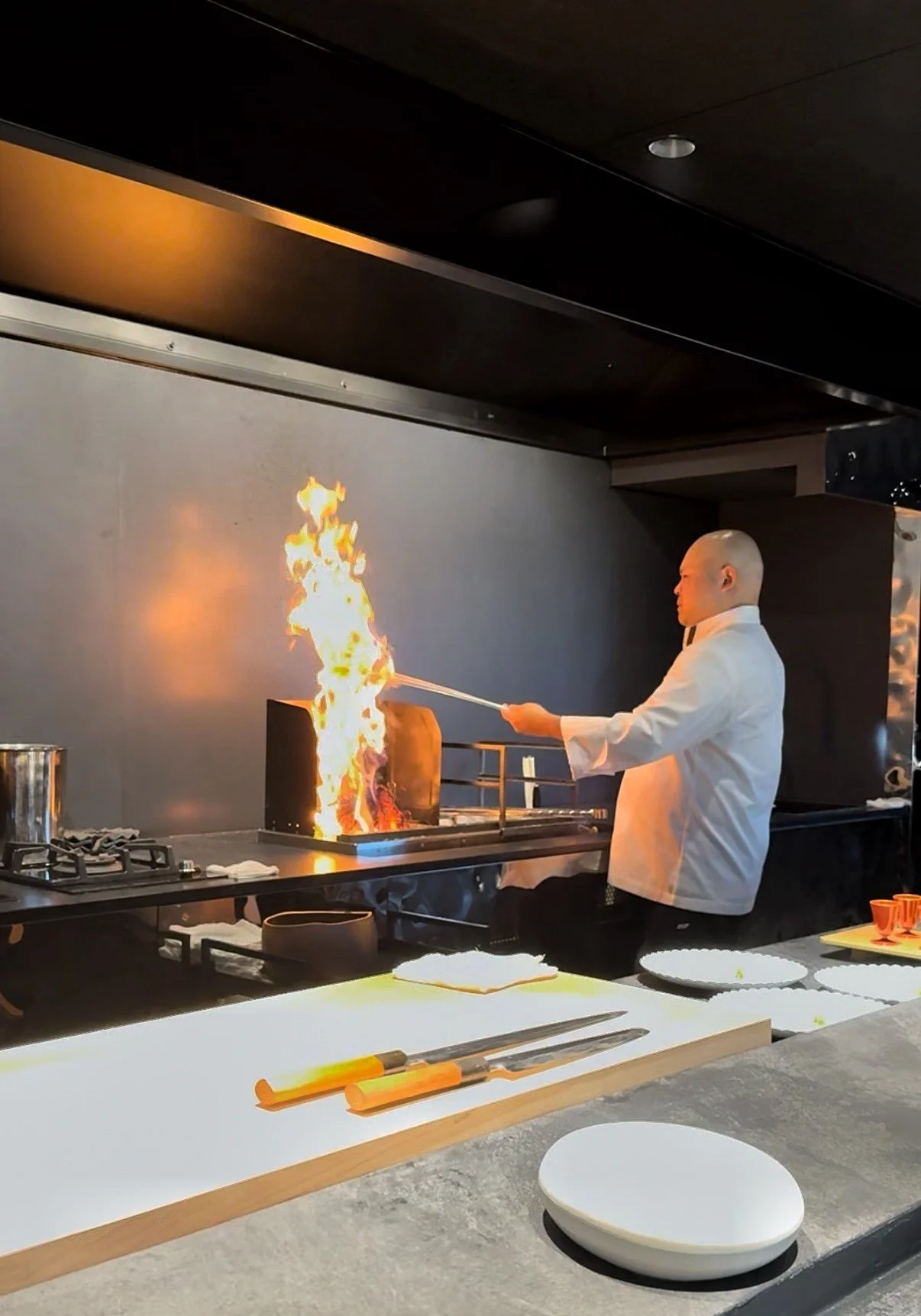
At the helm is Head Chef Ikuo Kobayashi, whose warm presence is matched by a formidable résumé (Ginza Kyubey, Sushi Saito, Ginza Iwa, Sushi Kanesaka). Kappo, meaning to ‘cut and cook’ encompasses a broader repertoire of techniques, including grilling, simmering and frying, making the experience less sushi-centric by design.
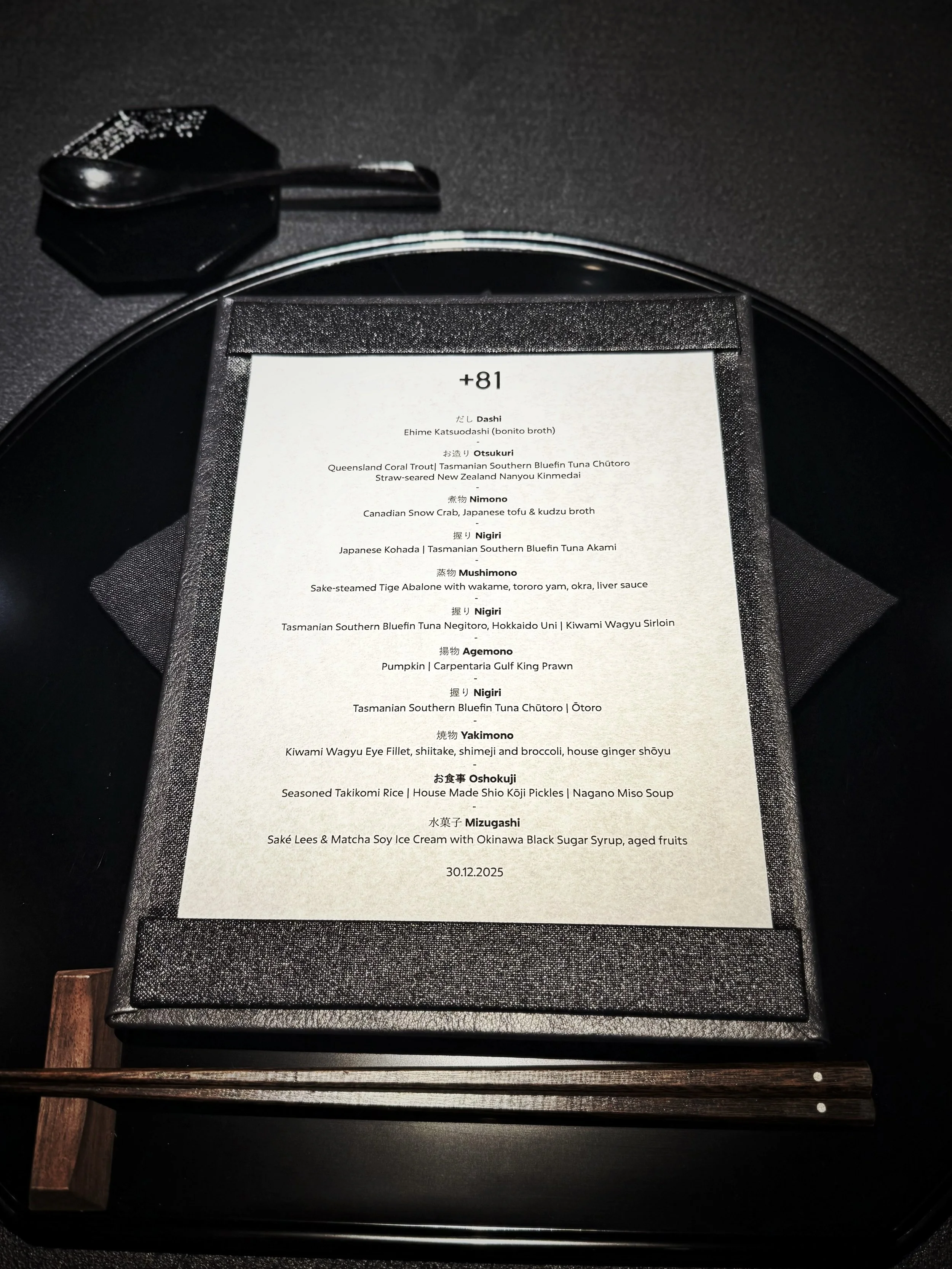
The eleven course menu opens with a chilled, bonito-forward dashi that gently prepares the palate. Reappearing throughout the meal as a quiet anchor, it establishes Chef Kobayashi’s understated cooking philosophy from the outset.
As expected during a soft launch, the evening delivered both highlights and moments still settling into place:
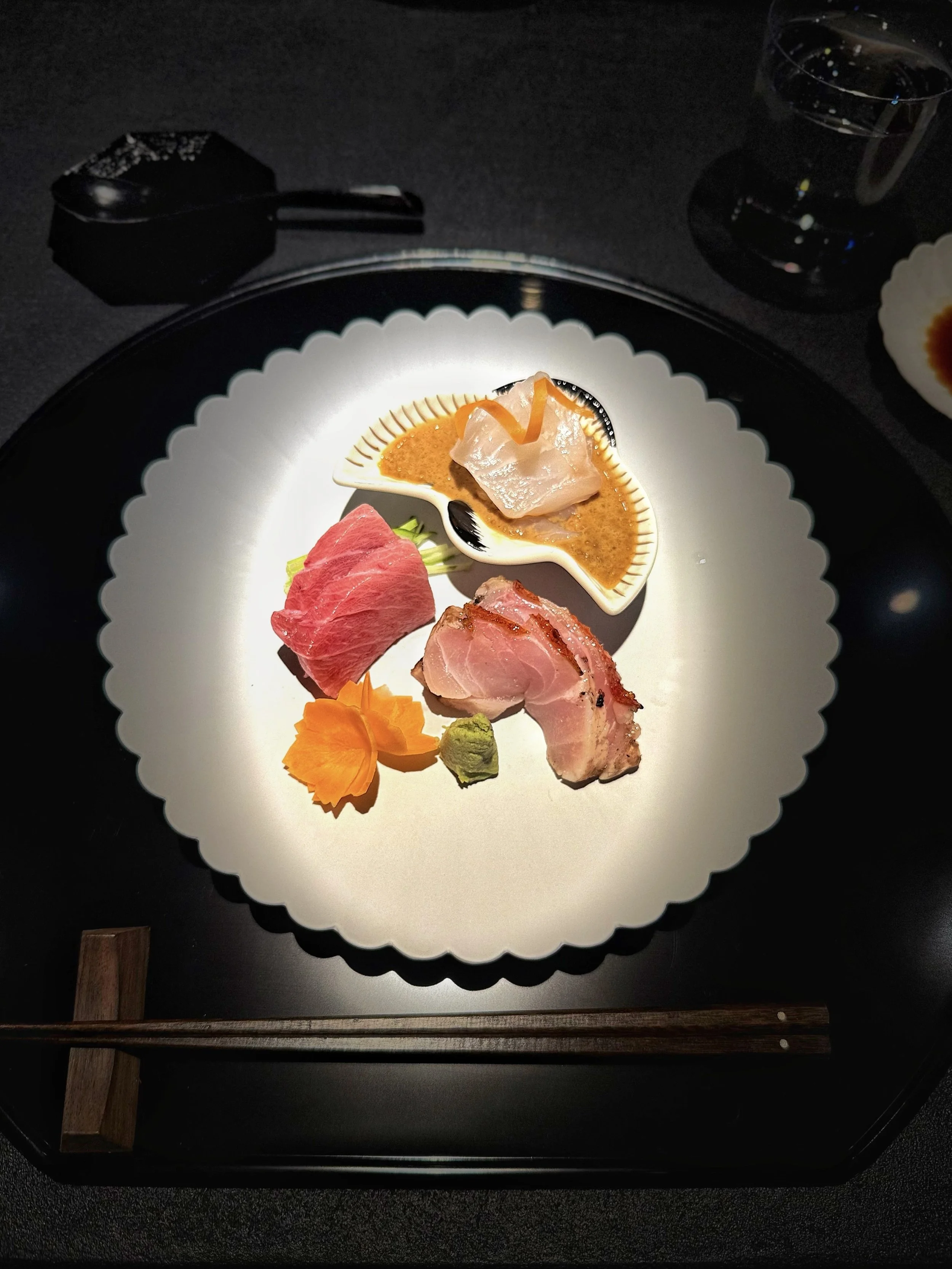
Otsukuri: Warayaki-seared New Zealand nanyou kinmedai (imperador) was exceptional. The rice-straw smoke imparted an earthy depth that enhanced the fish’s natural sweetness and buttery richness without overpowering it, while the open-fire preparation added a welcomed sense of theatre.
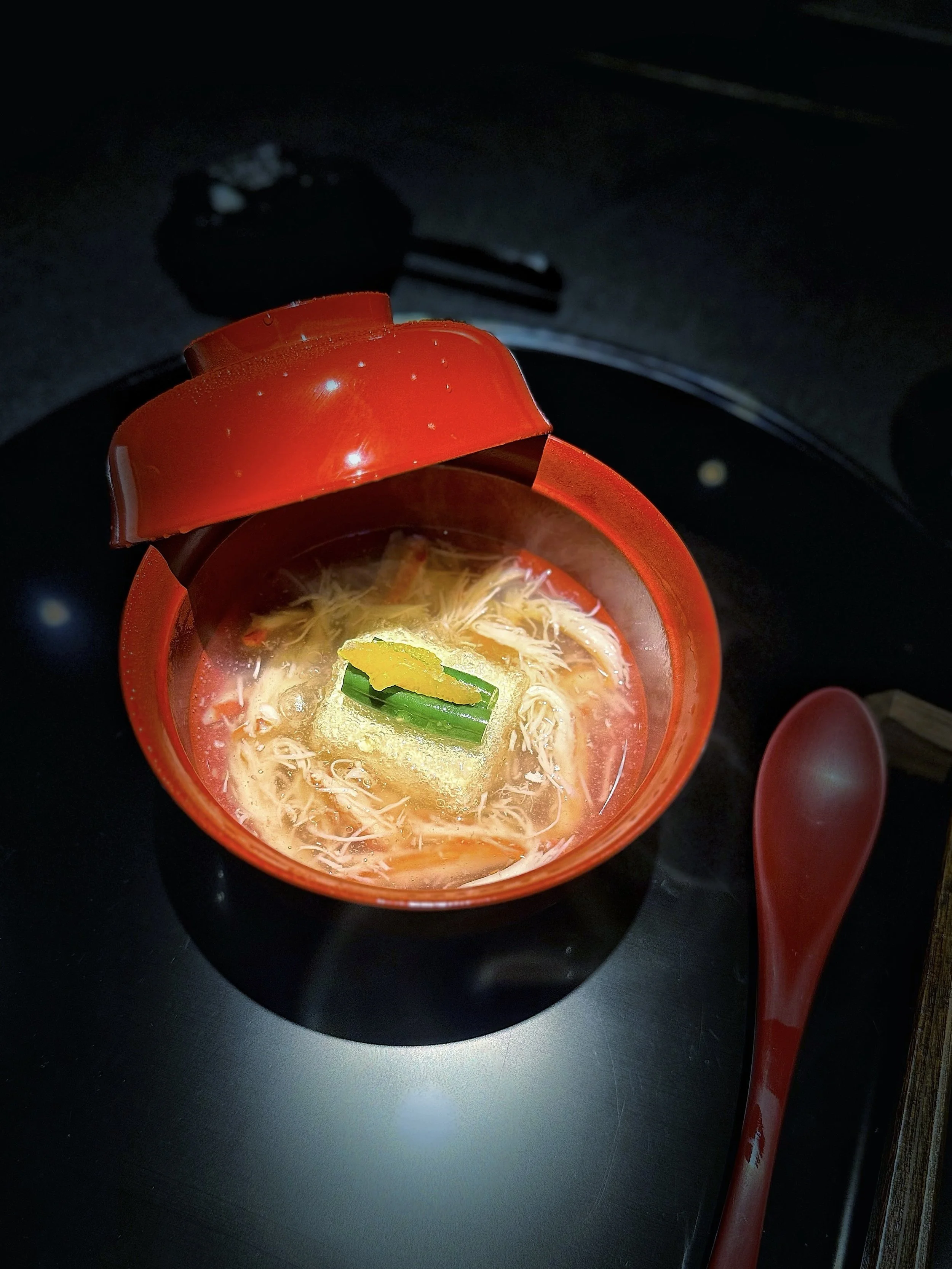
Nimono: A simmered dish featuring Canadian snow crab with delicate, harmonious flavours, but the tofu – described as crispy – skewed noticeably soft, disrupting the intended textural contrast and detracting from an otherwise pleasant course.
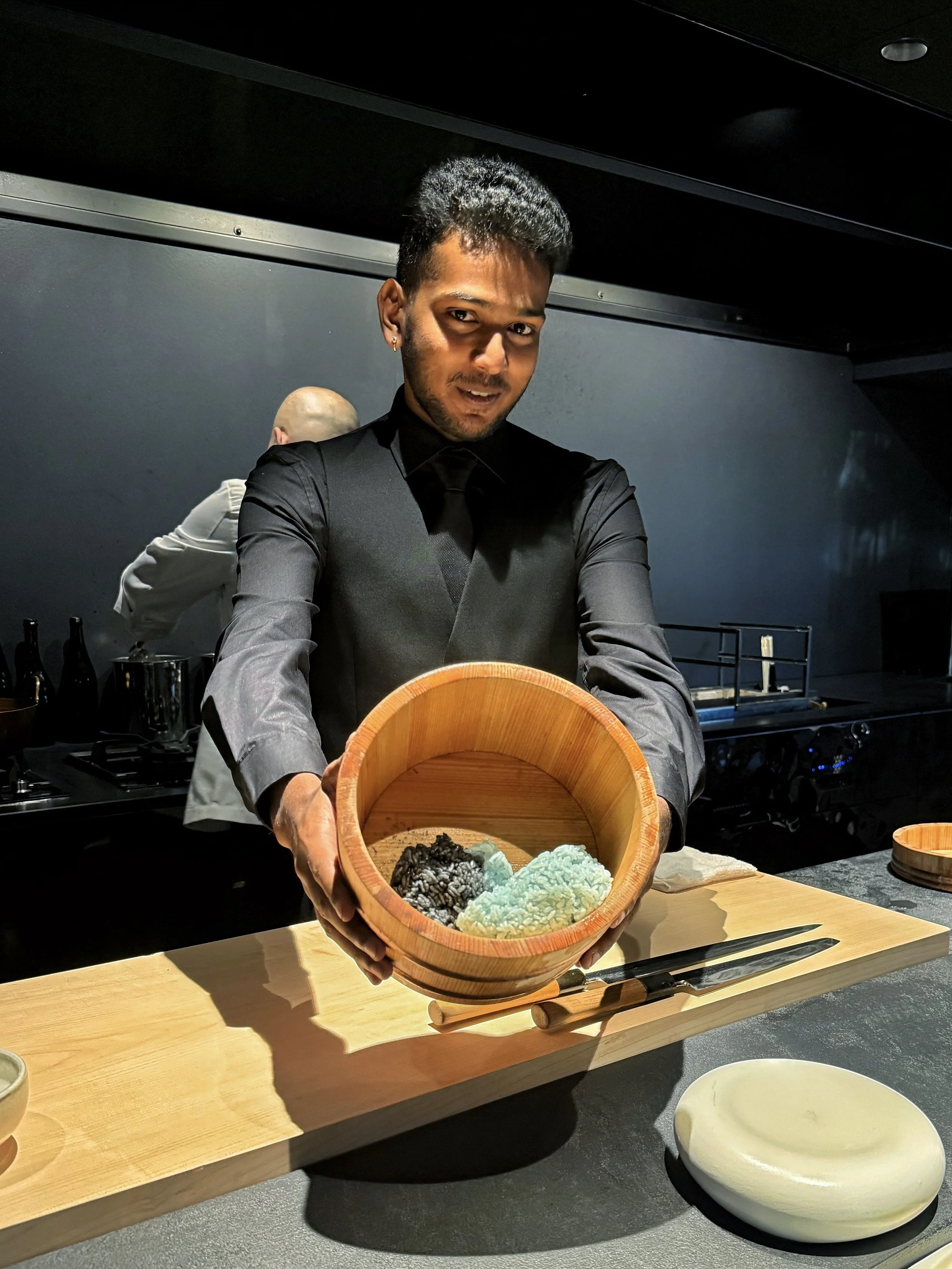
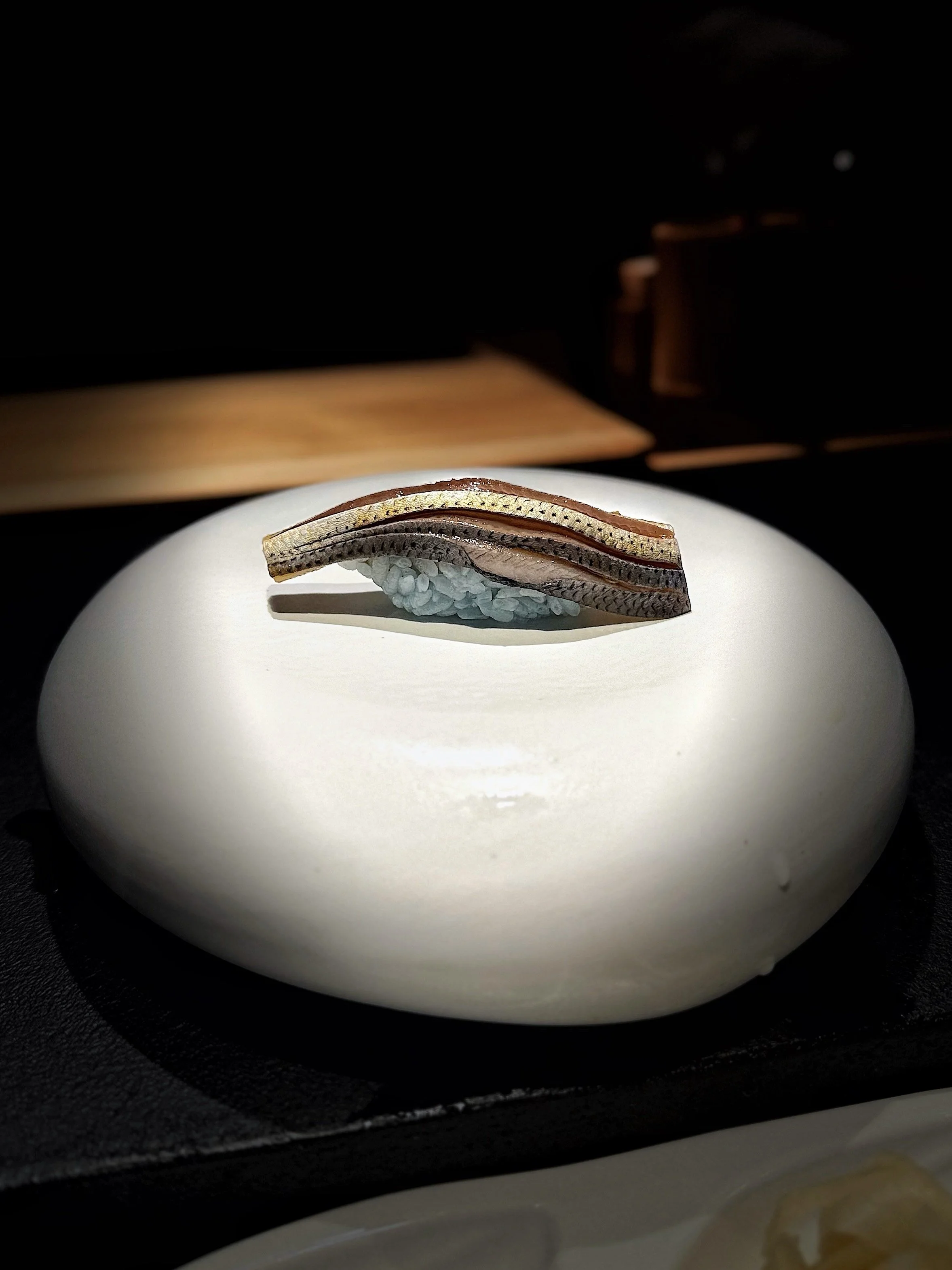
Nigiri: Kohada is widely regarded as a benchmark of a sushi chef’s technical mastery. While the curing and ageing were well judged, the neta’s broken skin compromised its visual finish – a surprising oversight for a restaurant of this calibre. Chef’s signature black and blue shari (blended with bamboo charcoal and Icelandic spirulina) was conceptually compelling, however a slightly more generous portion would have better expressed its distinctive character, being one of +81’s key points of difference.
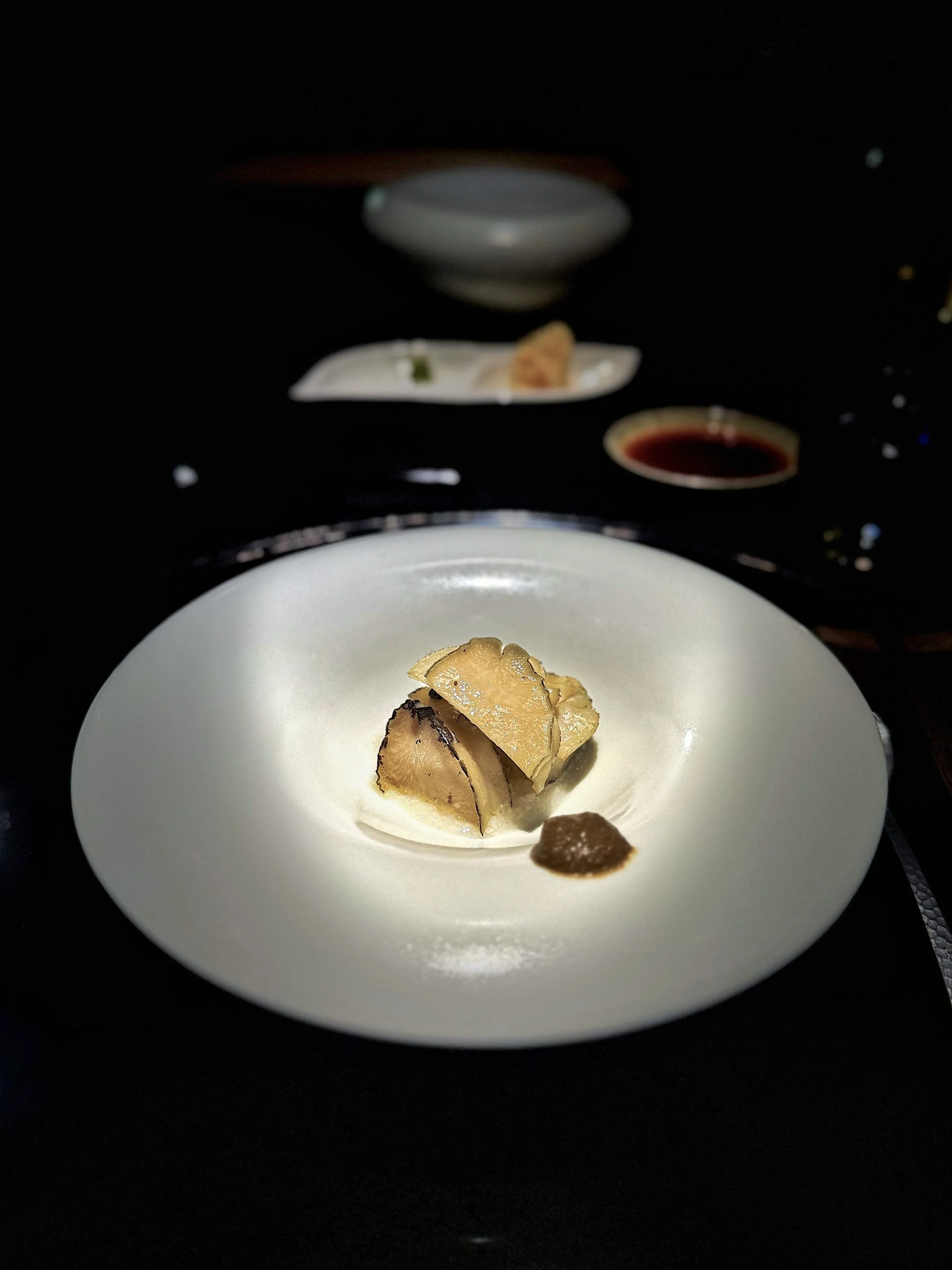
Mushimono: The sake-steamed tiger abalone was tender and the liver sauce added a dimension of luxurious umami. However despite the impeccable execution, the misspelling of ‘tiger’ on the menu proved distracting – an error that remained uncorrected days later when a friend dined (despite it having been flagged). Such a slip, whilst minor, feels out of place at this level of dining.
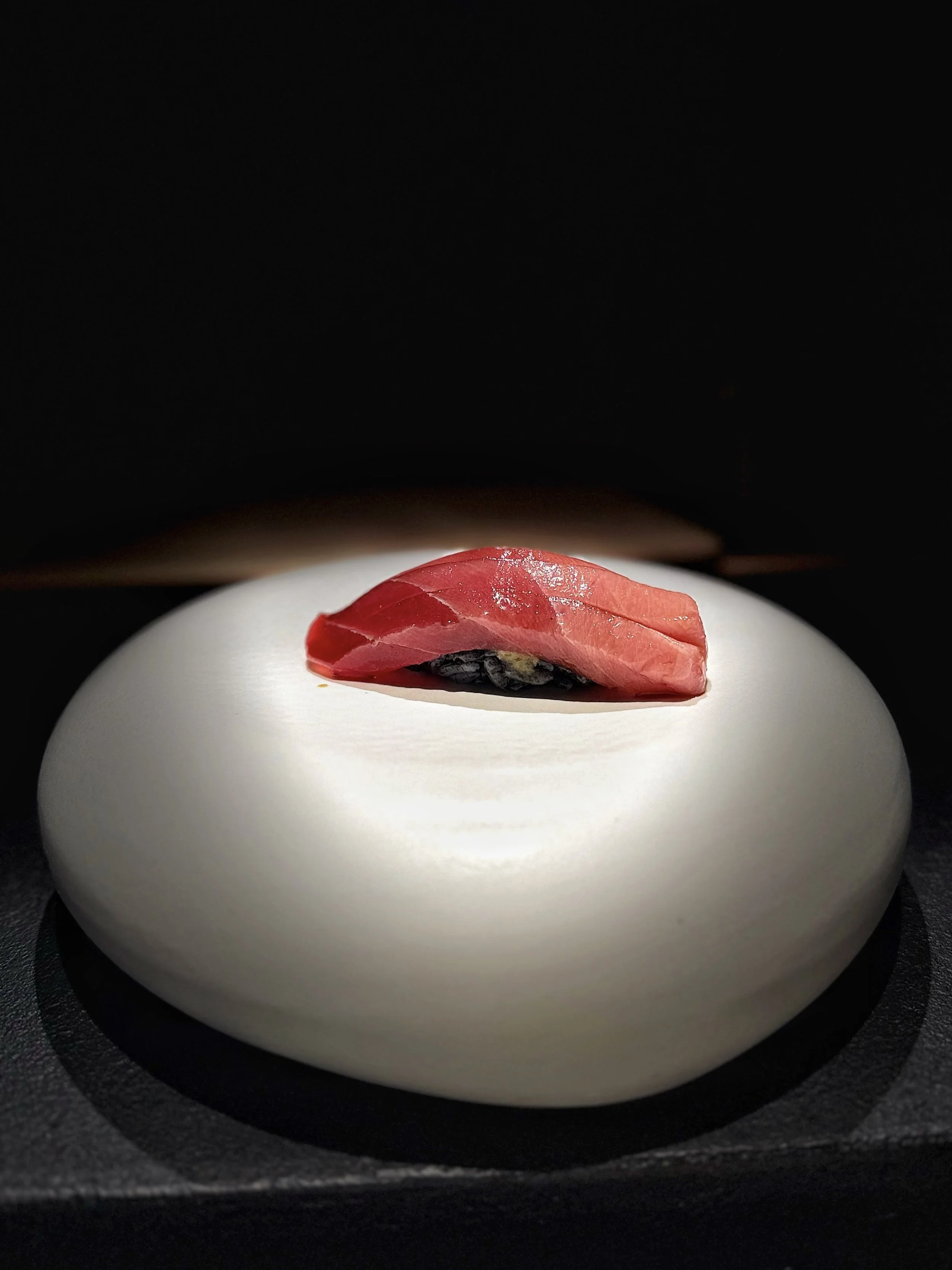
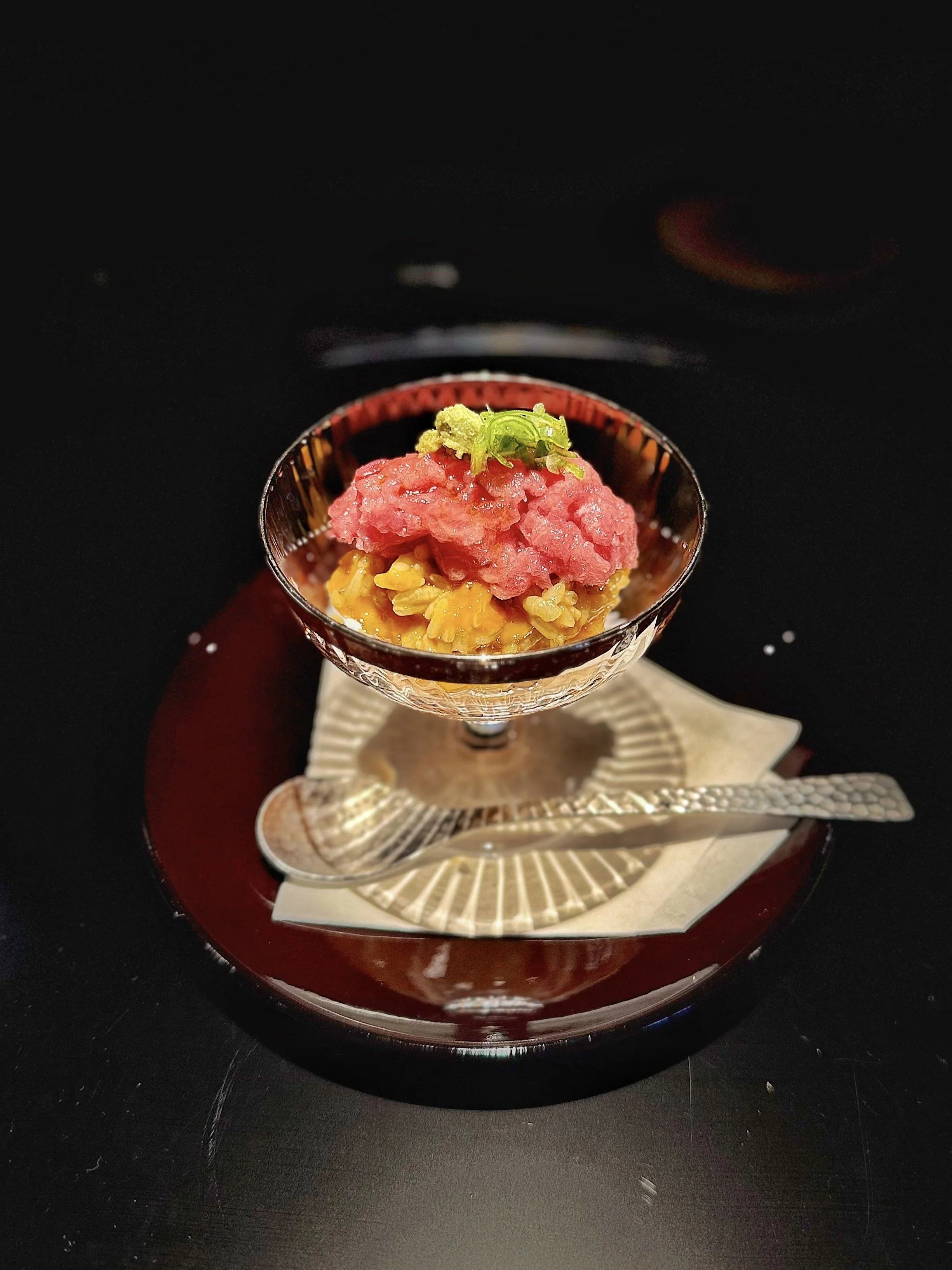
Negitoro Don: The clear peak of the night. Tasmanian southern bluefin negitoro paired with Hokkaido uni and the striking blue shari delivered both indulgence and balance, further reinforcing the opportunity for more rice across the nigiri courses.
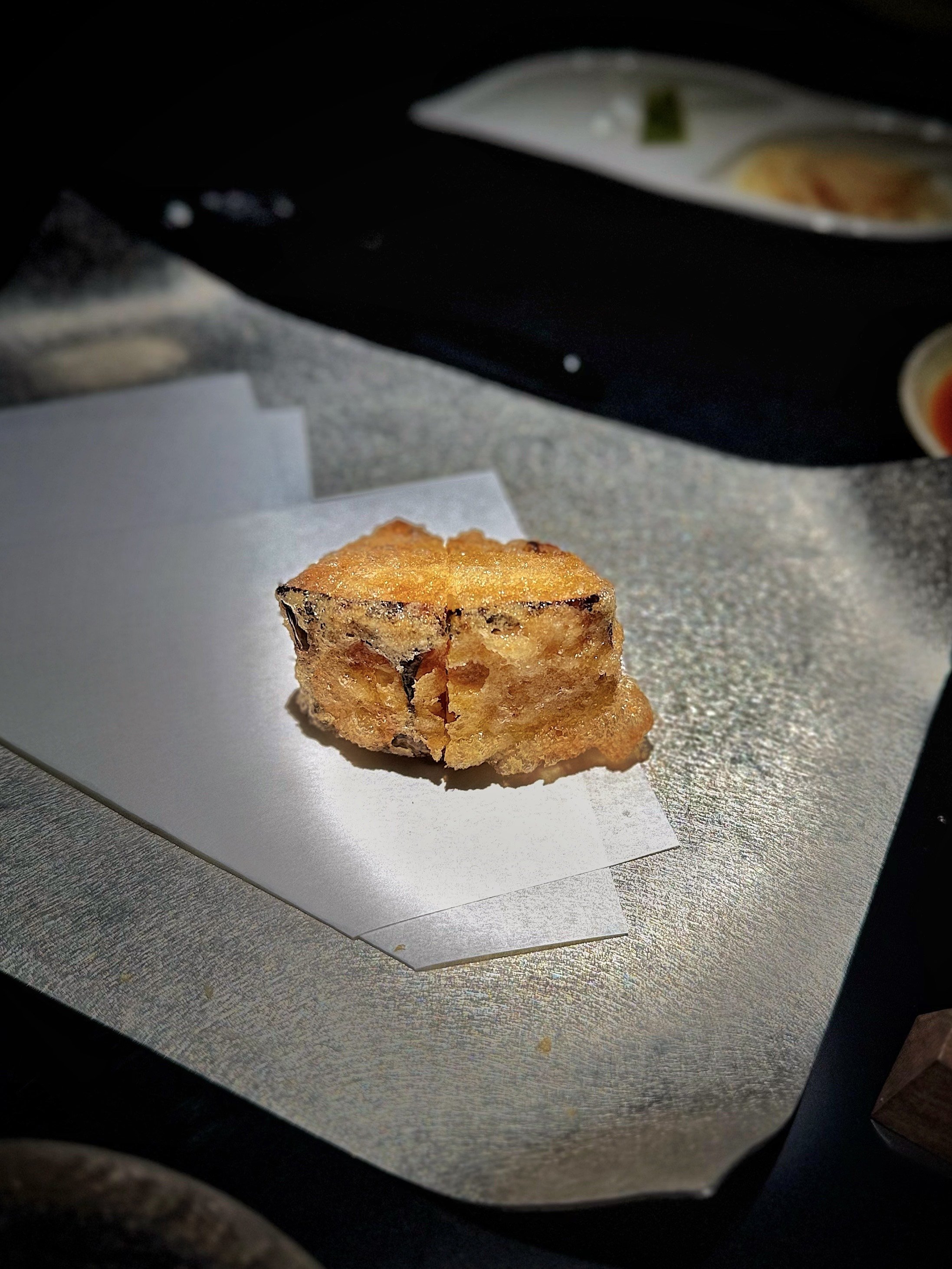
Agemono: Possibly the best tempura pumpkin I’ve encountered – slow roasted at 150 degrees, dusted in rice flour and fried in rice bran oil. The result was a feather-light crust with a velvety, caramelised centre. Chef’s guided tasting progression with salt and dipping sauce elevated the course further. The prawn tempura, enjoyed with and without lemon, was similarly accomplished.
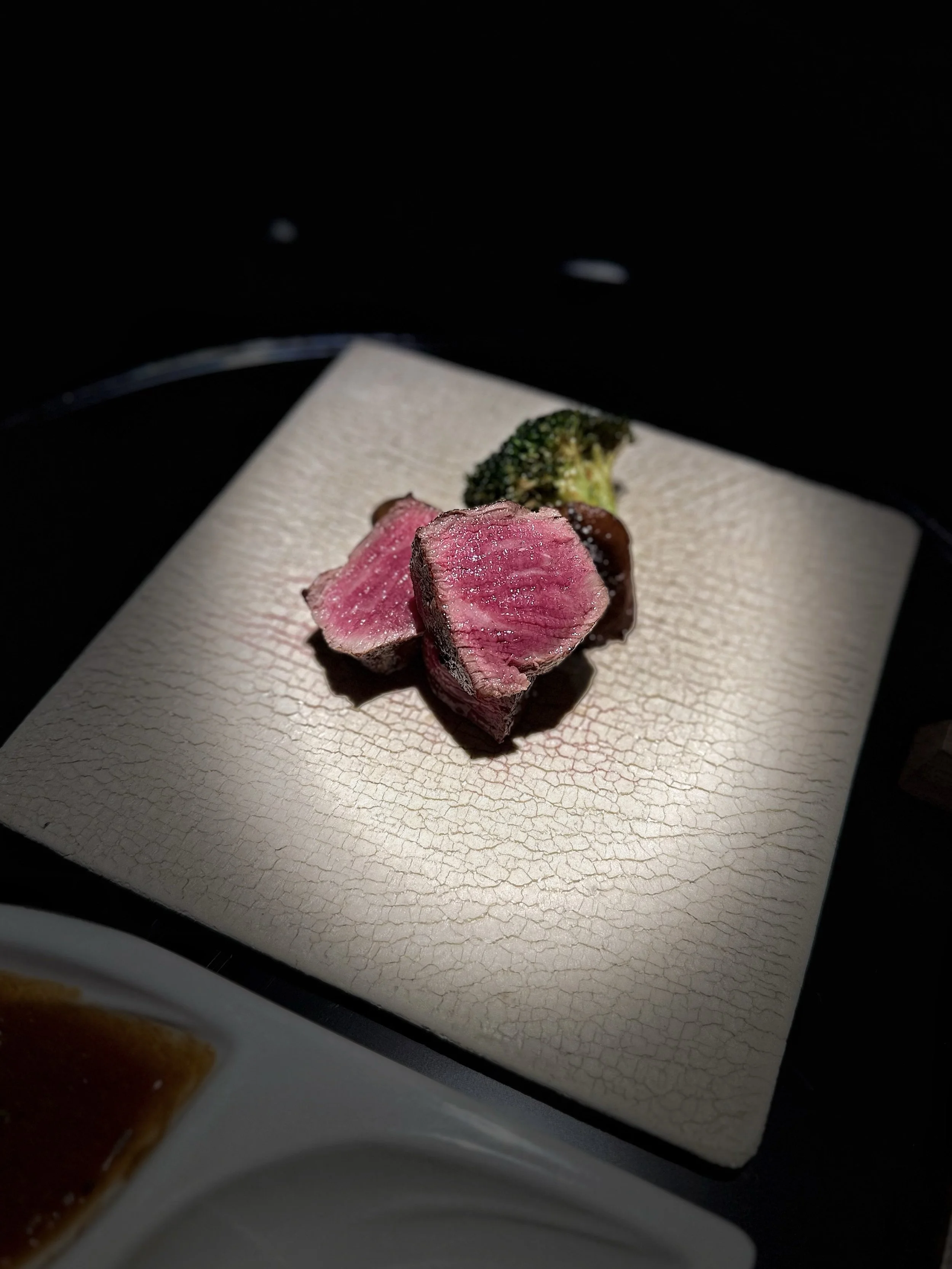
Yakimono: Fullblood Kiwami 9+ Wagyu eye fillet arrived undercooked for my preference. A deeper caramelisation would have better honoured the marbling and the thick cuts proved awkward to navigate with chopsticks.
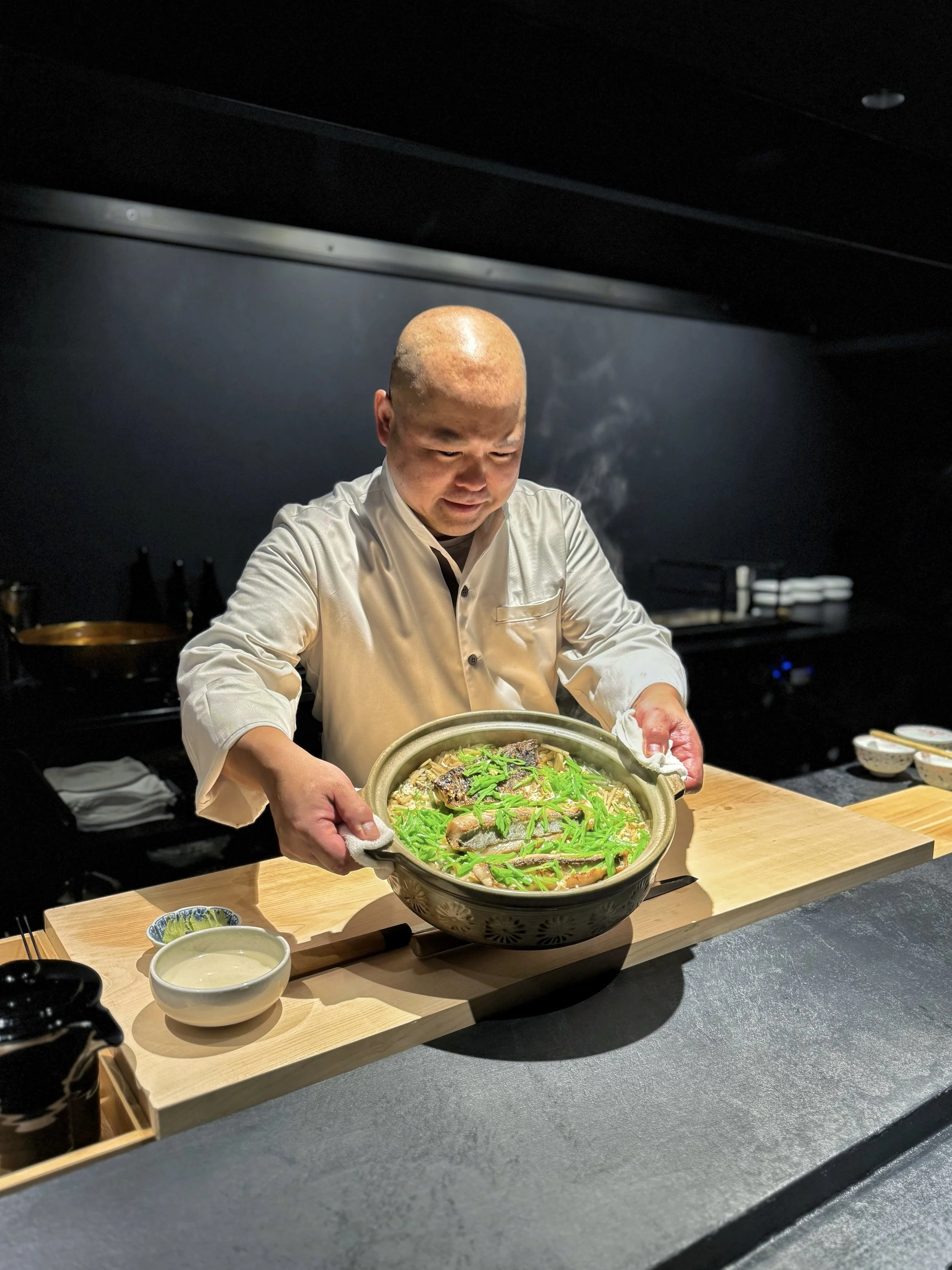
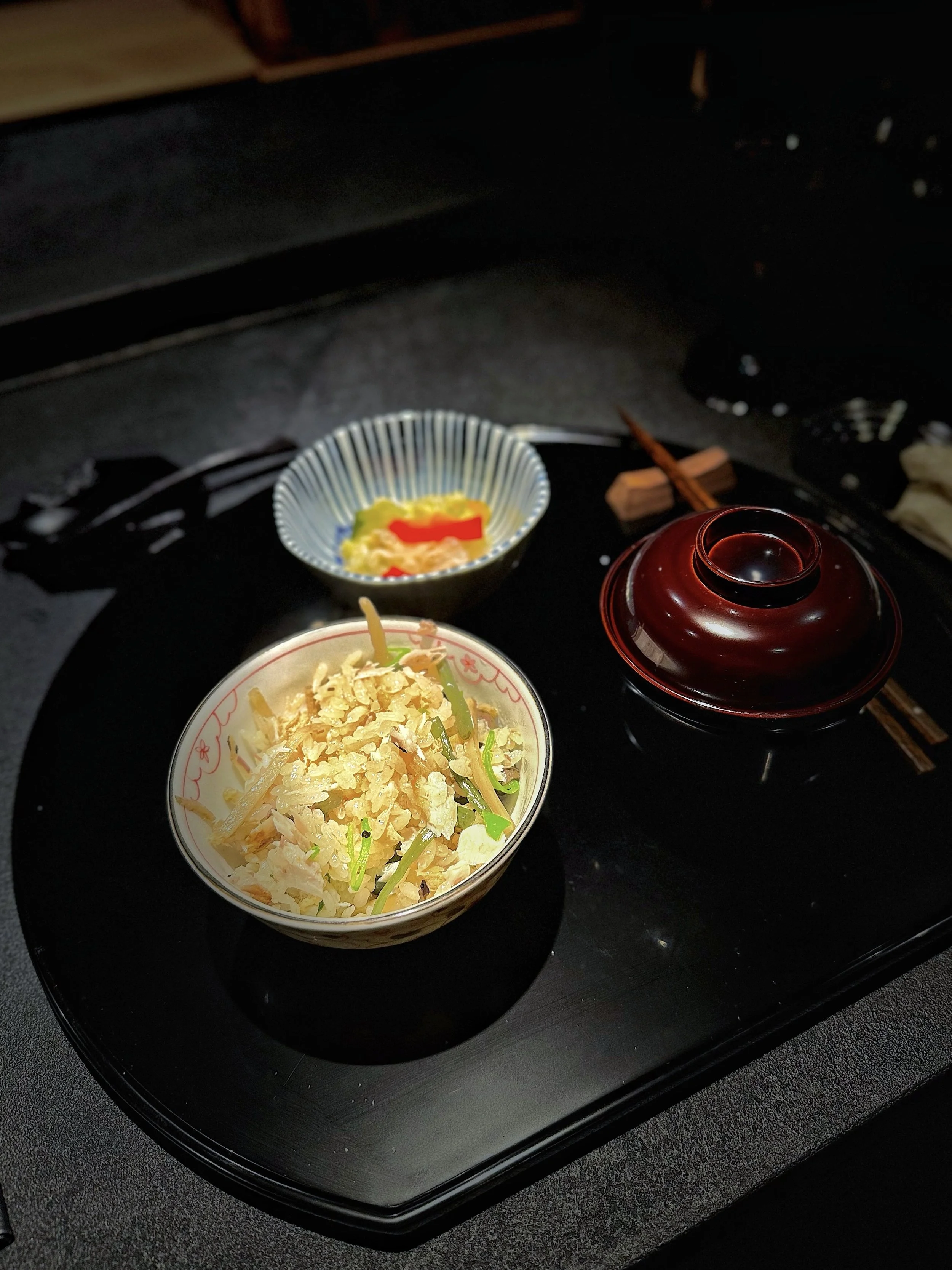
Oshokuji: Comforting and generous, with takikiomi rice offered in portions of choice. Unable to finish more than a small serve, I appreciated Chef’s kind gesture of preparing an onigiri for me to take home.
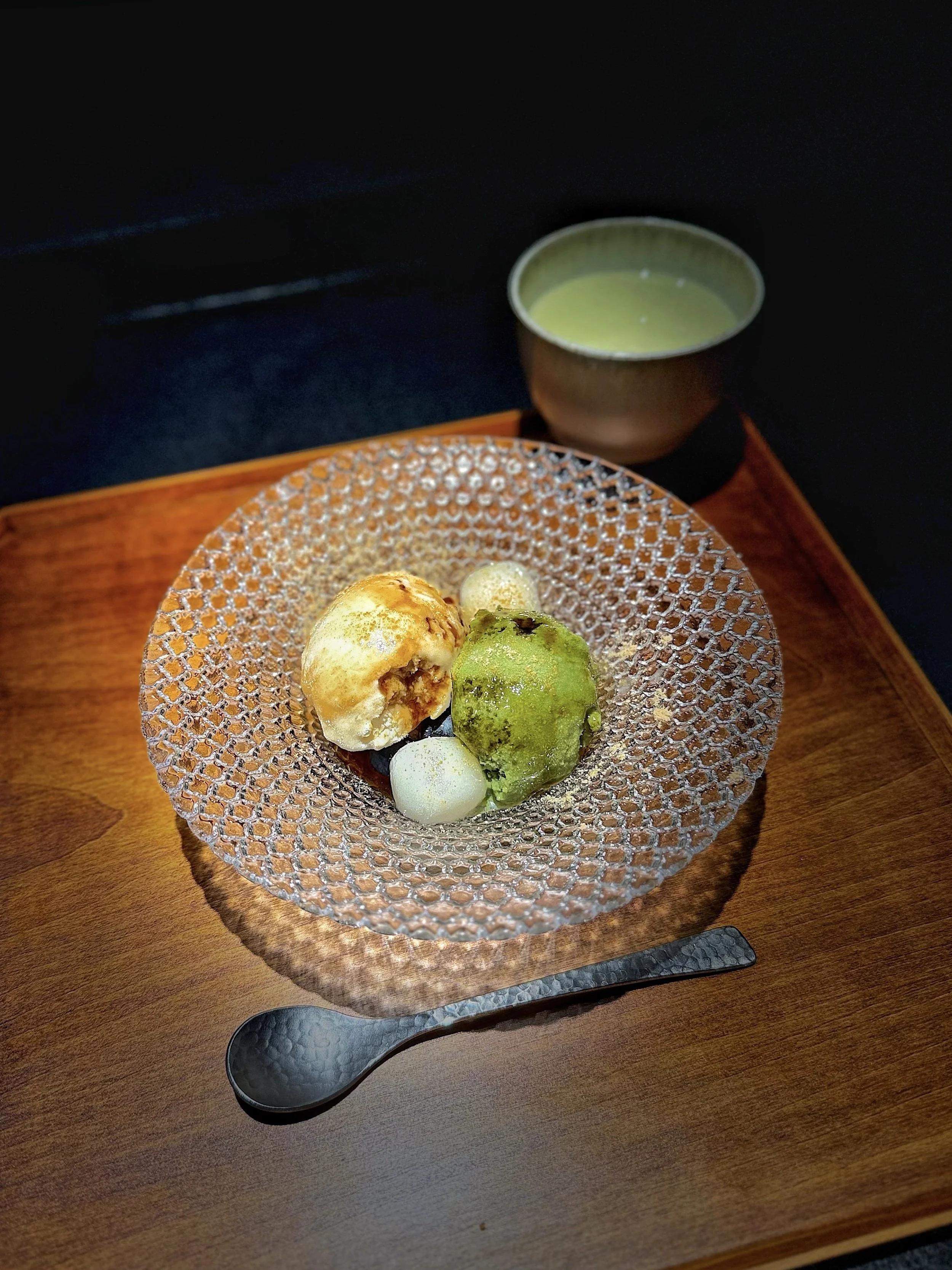
Mizugashi: A clean conclusion to a gluten-free, dairy-free and refined sugar-free menu. The sake lees and matcha soy ice creams lacked the richness of traditional versions but served alongside aged fruit, delivered a refreshing, palate-cleansing finale.
Notably, Chef Kobayashi favours Australian produce over imported Japanese ingredients – a philosophical decision that some omakase purists may question at this price, though it aligns with a broader sustainability ethos.
Beyond the food, kappo dining hinges on connection. Chef Kobayashi is assisted by the affable Akira, a Singapore-based linguistics specialist, given his limited English. This dynamic felt endearing – reminiscent of dining in Tokyo – though at times it shaped the level of interaction, particularly when questions were answered inconsistently. The kitchen layout and nature of certain course preparations also naturally limit engagement, with elements of the cooking performed facing away from guests.
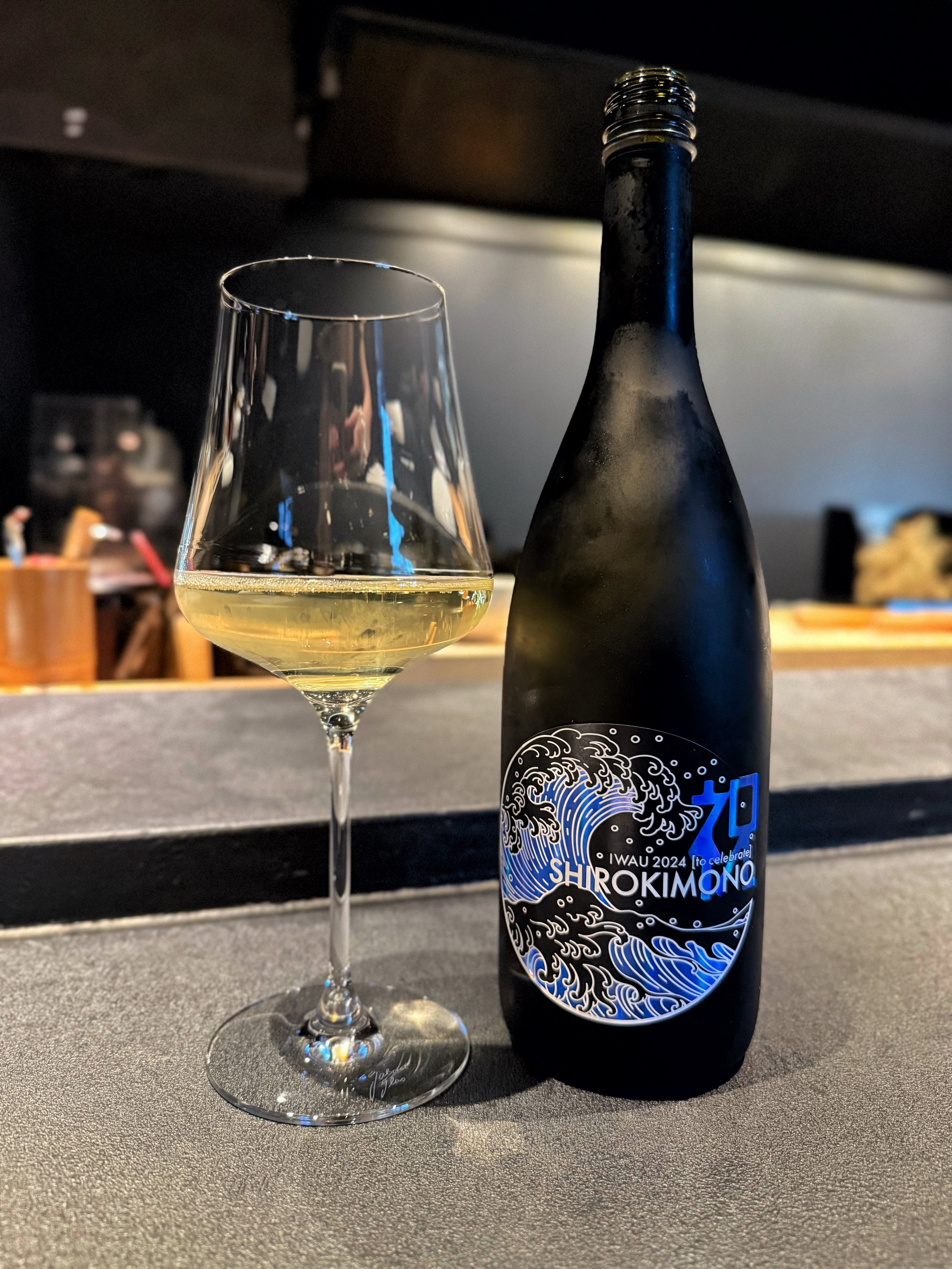
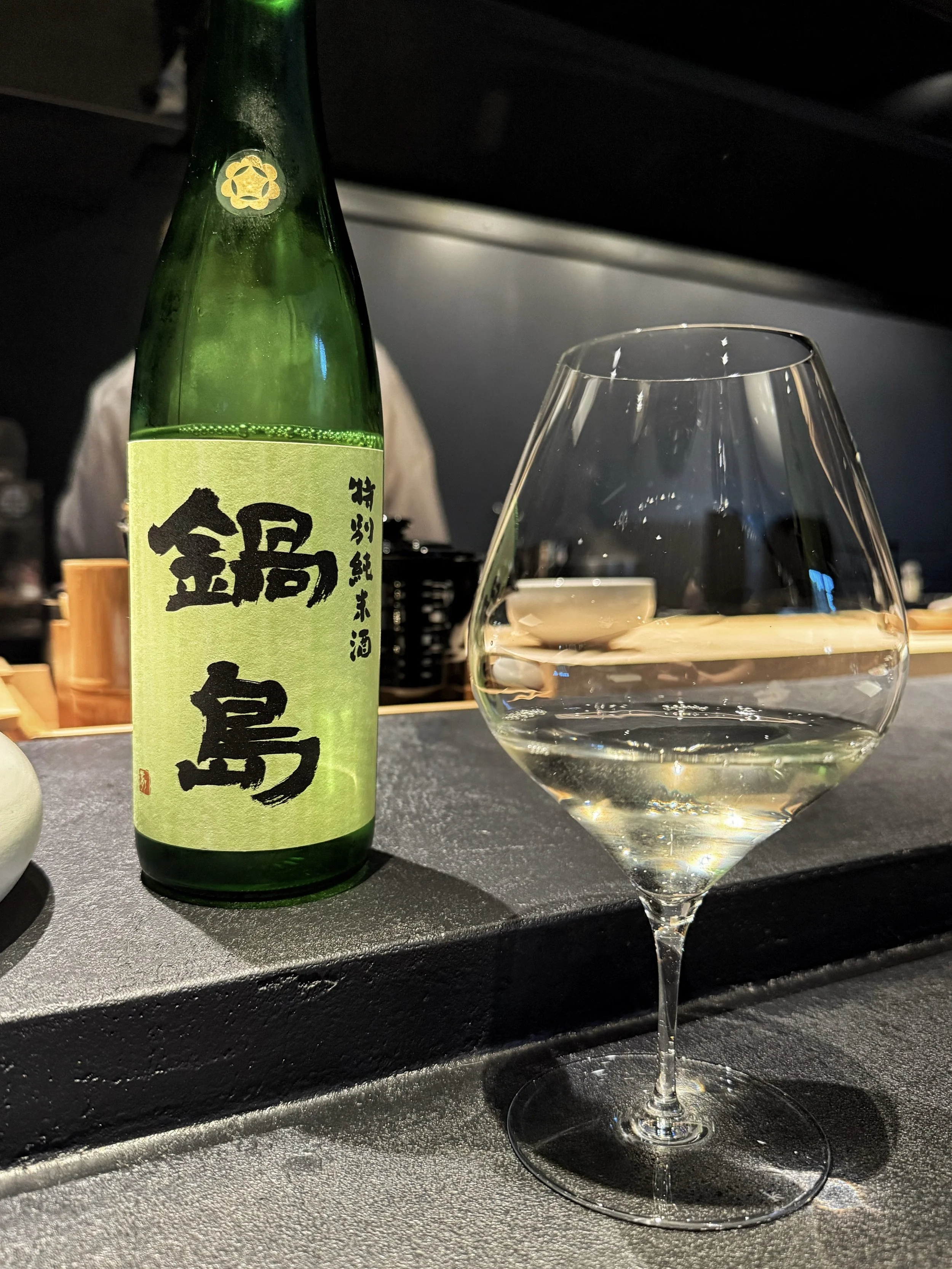
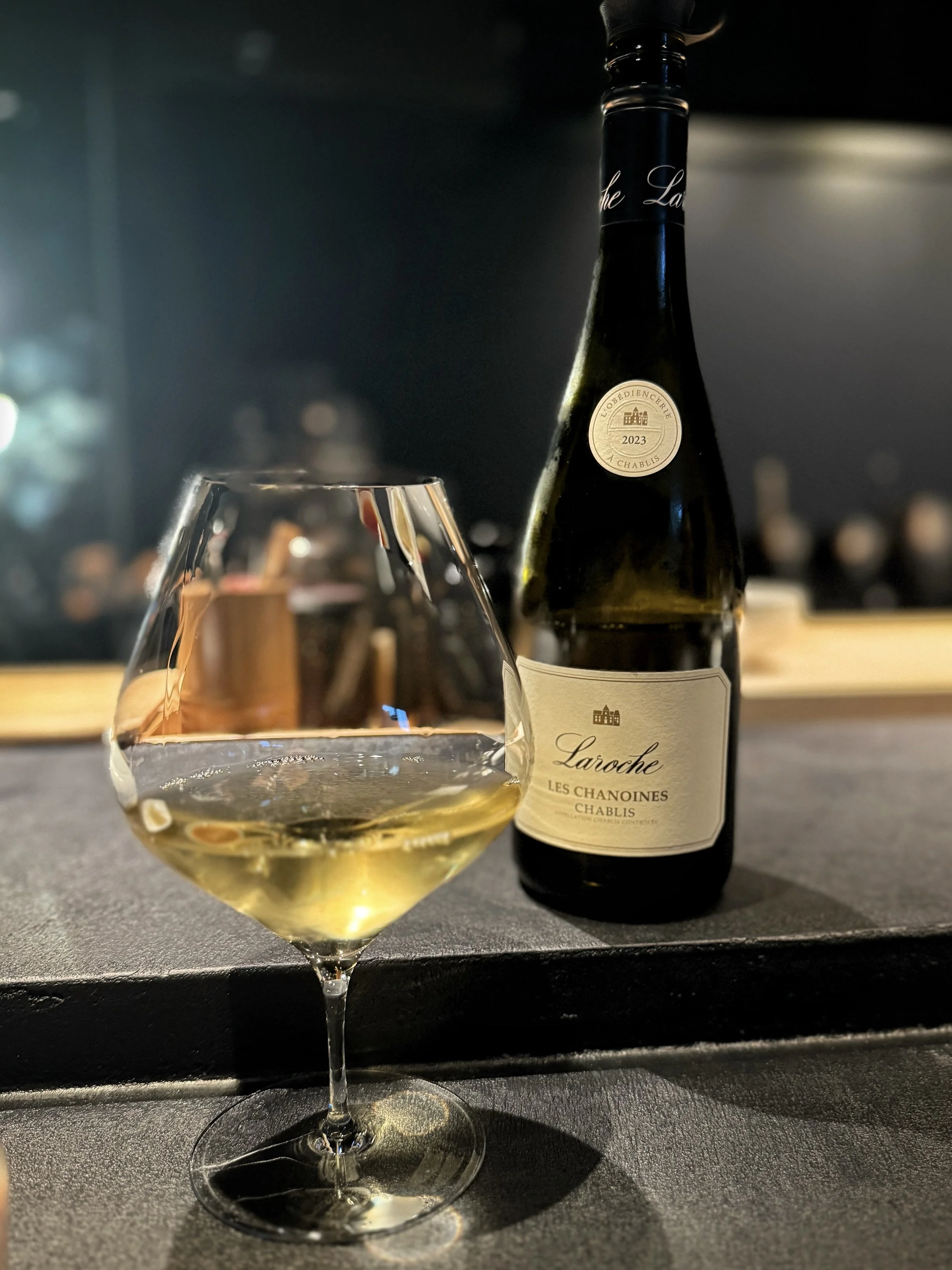
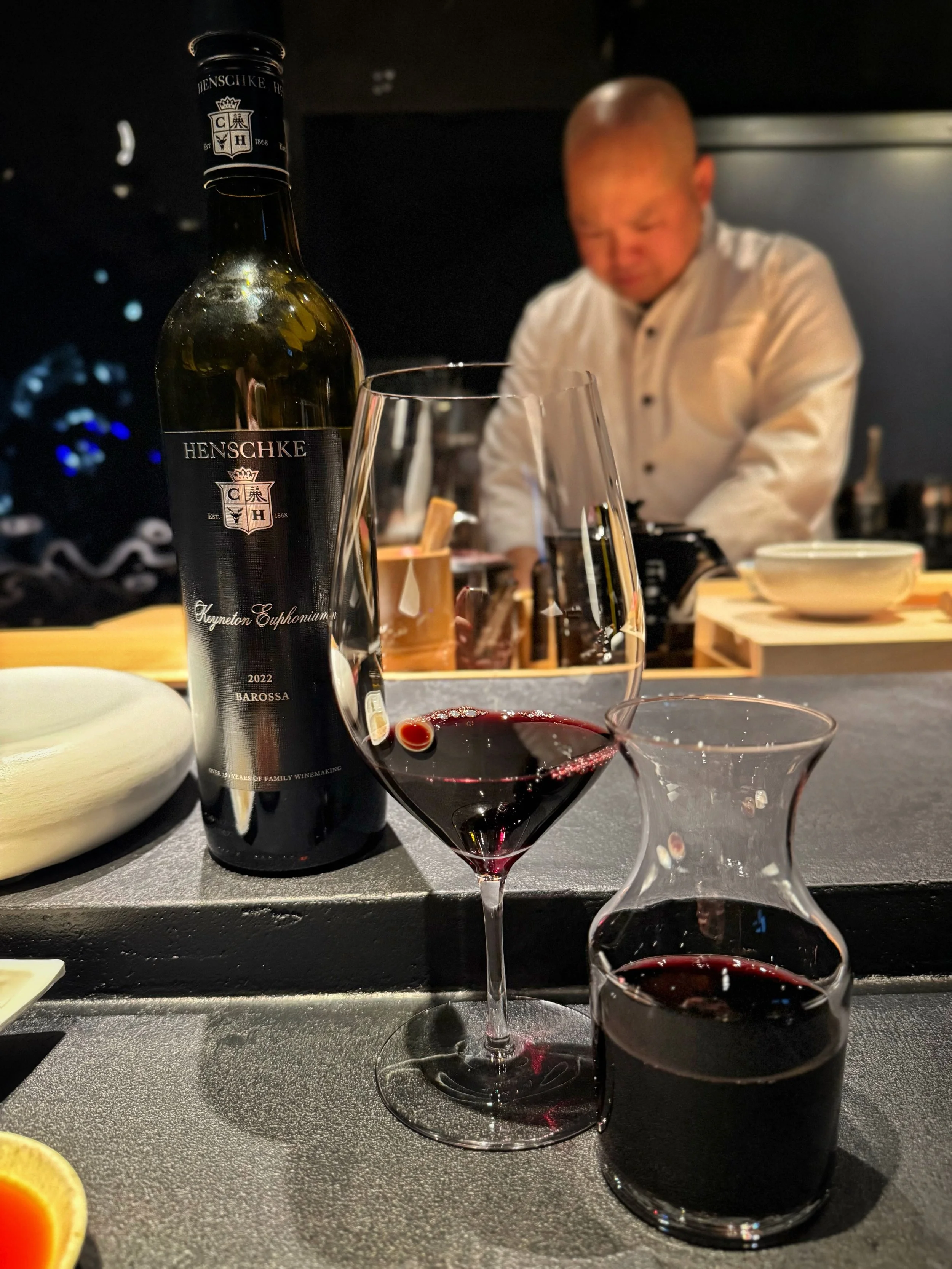
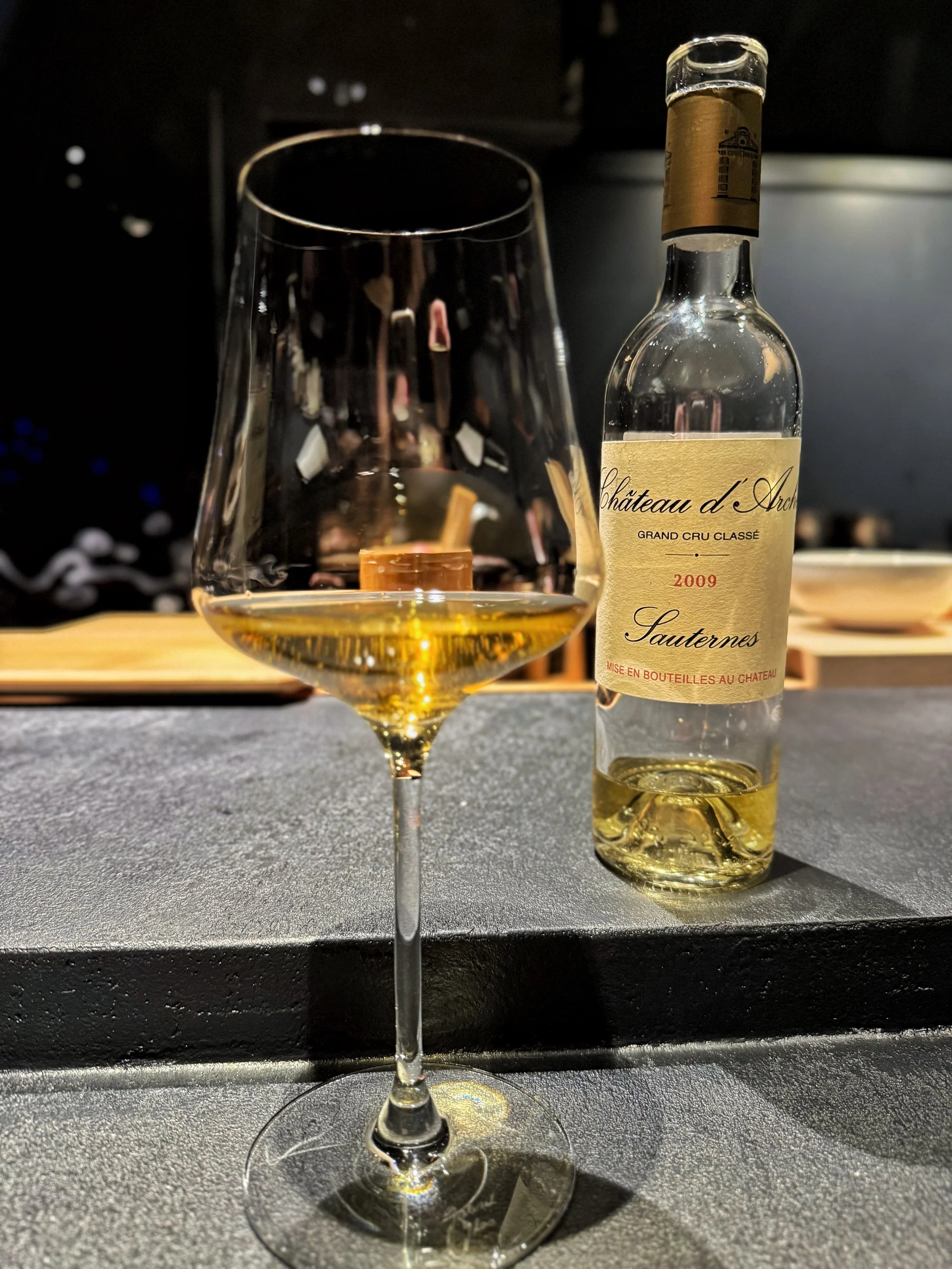
The beverage offering is strong, anchored by an extensive sake selection and thoughtful pairings that echo the restaurant’s premium positioning. Guests may opt to begin with a pre-ordered glass of Louis Roederer Cristal 2015 for $125 (steep until the bottle’s RRP is considered), and a private lounge is available for pre- or post-dinner drinks.
Special mention must go to General Manager and Head Sommelier Sean Lam (ex-Ritz-Carlton Melbourne), whose professionalism, warmth, and encyclopaedic knowledge elevated the experience. Watching someone recall page numbers of a drinks menu from memory is quietly impressive!
The restaurant offers two nightly sittings at 5.30pm and 8.30pm, Tuesday to Saturday. I attended the earlier session and found the pacing comfortable, with no sense of being rushed.
So, is +81 Sushi Kappo worth the price? That ultimately depends on what $450 represents to you. For seasoned omakase enthusiasts, it’s worth experiencing – if only to see how it measures against Australia’s top tier. For more occasional diners, Brisbane offers options with stronger value propositions. I don’t regret the visit, but at this price point, it’s likely to remain a once-a-year destination amid the many other restaurants on my list.
Visit their website: +81 Sushi Kappo